Woodpecker siding damage can look like a few pale chips in the cedar or a single round hole under the eaves. On wood-sided additions in Mount Airy, Chestnut Hill, and Roxborough, those marks are worth checking before winter rain and cold set in. First, find out whether the damage stops at the paint or goes through the board.
A Point Breeze homeowner noted the neat finish on their siding replacement in a recent public review. That is a useful standard for a small repair, too. A patch should blend in, but matching the paint is the last step. First, the contractor needs to know what the damaged area looks like underneath.
Why Woodpecker Siding Damage Shows Up in Fall
Penn State Extension’s woodpecker guidance notes that damage peaks in spring and fall. Woodpeckers may drum to communicate, look for insects, or excavate a cavity for shelter. Drumming is loud but may leave little damage. In contrast, repeated shallow pecks or a deeper opening deserve a closer look.
Cedar, redwood, and plywood are among the sidings commonly affected. A brick front does not rule it out. The rear addition, porch trim, or eaves may still be wood. Even on one house, two walls can have different materials and weather exposures.
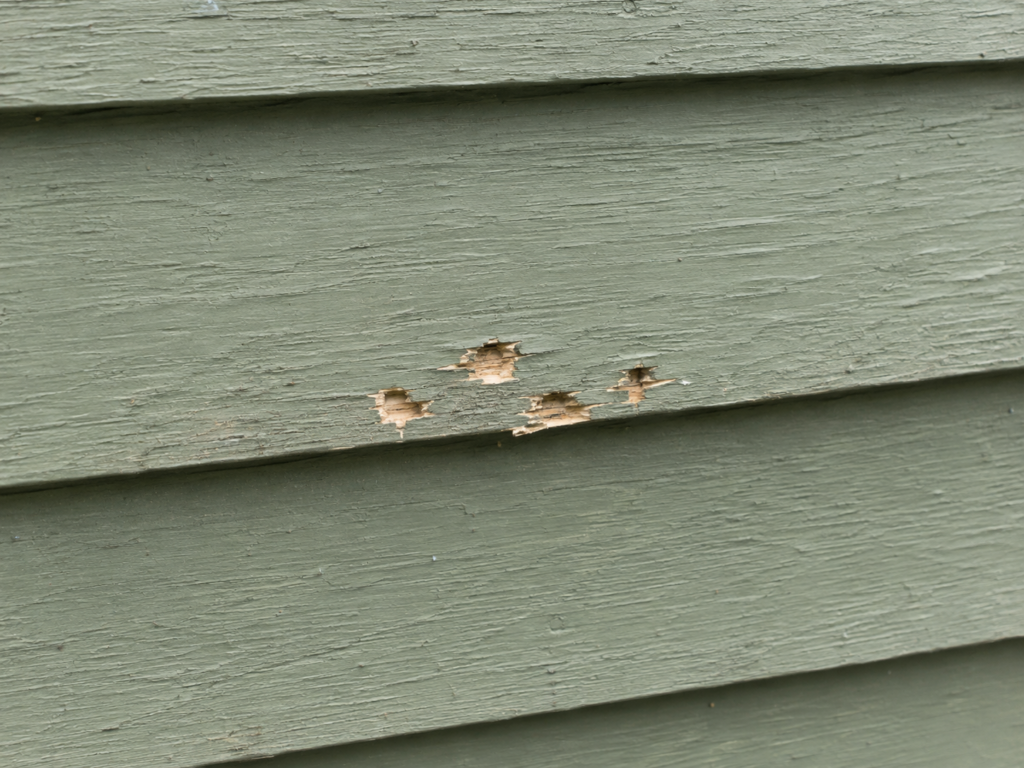
Fresh pale wood often makes new damage easy to spot against old paint. A deeper hole can let rain reach the layer behind the siding. Still, a gouge does not prove the wall is wet, and a round hole does not prove a bird made it. Old fastener holes and loose knots can look similar from below.
How a Pro Checks Woodpecker Siding Damage
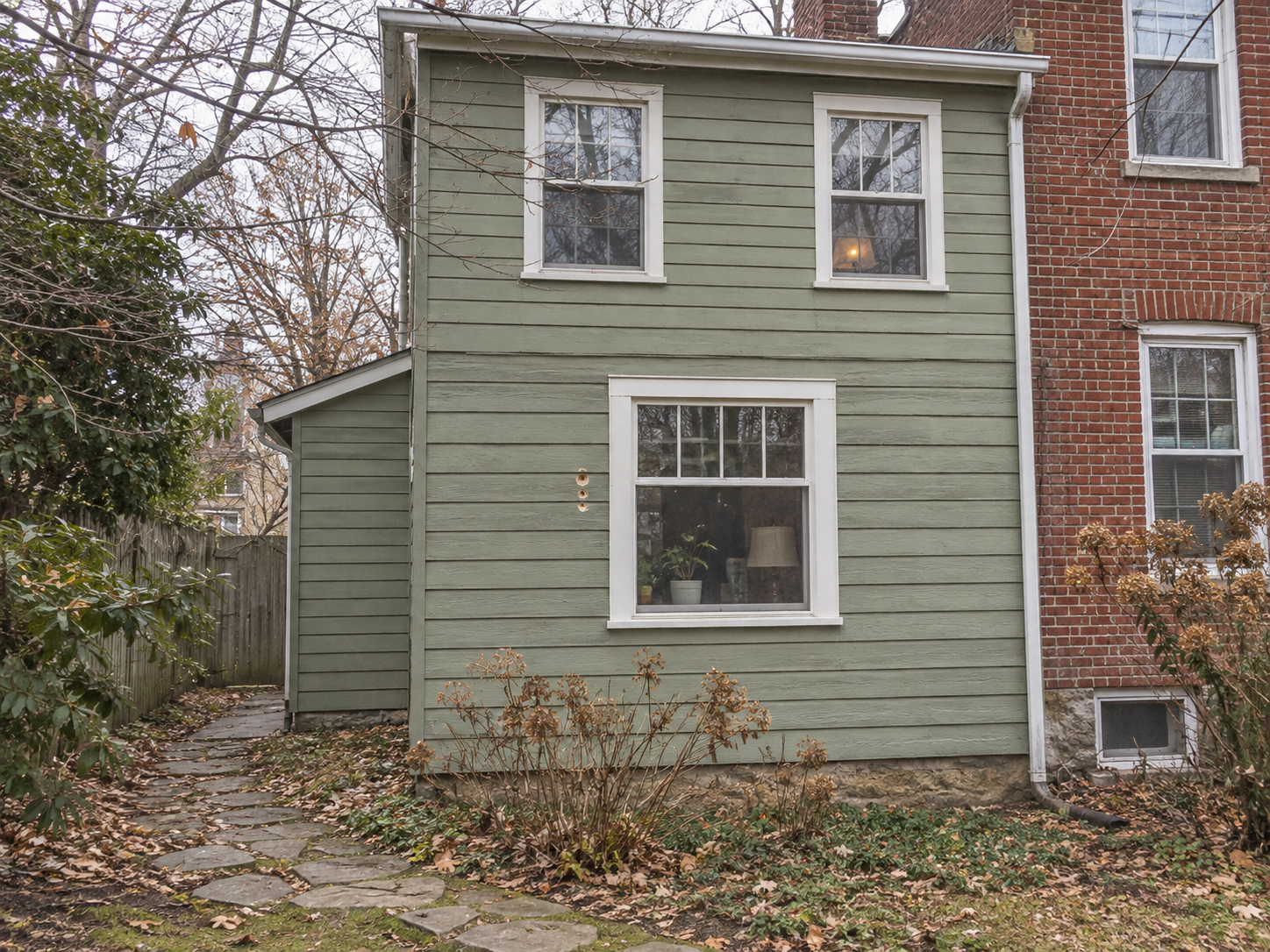
Ask the contractor to photograph the whole wall first, then the damaged board and the nearest seam or trim joint. The wide photo shows where the problem sits. The close-up shows how far it extends. Together, they give you something concrete to compare after the repair.
- Damage depth. Check whether the mark is a shallow gouge, a split through the board, or an opening into the wall. Look for loose edges and missing sections of the overlap.
- Condition of nearby wood. Check for soft spots, peeling finish, and water stains below the hole. If the pattern suggests insect activity, get a pest specialist’s assessment before closing the area.
- Signs of an occupied cavity. Pause the work if a bird may be using the opening. Have a qualified wildlife professional advise before anyone covers or fills it.
- What is behind the board. If a board must come off, photograph the exposed area before closing it. That photo can show whether the sheathing and water-resistive layer were intact or needed repair.
Finally, ask for an after photo that shows the finished board, lap, and adjacent trim. You should be able to see what was repaired, not just that the surface received fresh paint.
Targeted Repair vs. Full Siding Replacement
A targeted repair makes sense when the contractor finds a shallow patch of damage or a few affected boards and the surrounding wall is sound. A shallow gouge may need only a compatible exterior repair and finish. A split or punctured board may need to come out so the contractor can check and restore the backing as needed.
When swapping a board, match its thickness, shape, and visible width so it sits correctly against the neighboring courses. A similar shade alone will not fix an uneven lap. Ask how the new section will meet the older finish, especially if the existing color has faded.
A full replacement makes sense when inspection finds decay, loose boards, or failed water protection across much of the wall. That may mean recladding one elevation, not the entire house. A different siding material may be worth comparing if the damage recurs, but the new material still needs proper drainage and flashing.
Warning Signs You Can Check From the Ground
Use binoculars or a phone zoom to check under the eaves and along the wood trim. Look for a patch of pale chips, a ragged board edge, or a shadow inside a new hole. Stay on the ground. Do not probe an opening or run a hose at it to test for leaks.
Note whether you hear pecking in the same spot, or see a bird enter and exit. Indoors, look for a stain or bubbling paint on the wall near the damage after rain. A stain is not proof of the source, but it gives the contractor another place to check. Put the date on your photos so you can tell whether the marks are spreading.
Frequently Asked Questions
Does every hole mean I have insects? No. Woodpeckers can peck for reasons other than feeding. Repeated small holes along a board edge or signs of tunneling warrant a closer look, not an automatic diagnosis.
Can I fill the hole right away? Do not fill a deep or possibly occupied opening. First rule out wildlife activity and check for concealed damage. If the wood is sound and dry, a shallow surface repair may be enough.
Can siding repair happen in November? It may be possible on a dry day. The contractor should check the temperature and drying limits for any primer, sealant, or patch material. Ask about temporary weather protection if the finish must wait.
Will new siding stop the pecking? Not necessarily. A material change may remove a favorite surface, but it does not address an insect problem or nearby bird activity. Resolve the cause where possible before replacing an otherwise sound wall.
Get the Damaged Siding Checked Before Winter
If you have a fresh hole on a Mount Airy twin or a damaged cedar board on a Roxborough addition, start with photos. Explore our siding services and exterior repair services. Then contact Philadelphia Exterior Contractors to discuss the damage and whether one board or a larger section needs attention.