On the first cold mornings of the season, many Philadelphia homeowners find water running down the inside of their windows, or a foggy haze trapped between two panes of glass. Both look like window problems, but they have different causes and very different fixes. One is usually about indoor humidity. The other usually means the window’s glass unit has failed.
This guide explains the three types of window condensation, what causes each one, what you can change inside the house, and when repair or replacement makes sense, with a focus on the older rowhomes and twins found in Roxborough, Manayunk, Mount Airy and across the city.
Why Windows Condense in Cold Weather
Condensation forms when warm, moist air touches a surface that is colder than the air’s dew point. According to ENERGY STAR, water condenses on interior window surfaces when the surface temperature of the window is below the dew point of the humid indoor air. ENERGY STAR also notes that certified windows are more resistant to condensation, but even they can experience it in cold weather.
Two things control whether it happens:
•How cold the inside surface of the window gets. Single-pane glass and uninsulated metal frames get much colder than modern insulated units.
•How much moisture is in the indoor air. Cooking, showers, laundry, plants and humidifiers all add moisture.
The Three Types of Window Condensation
1. Condensation on the inside surface
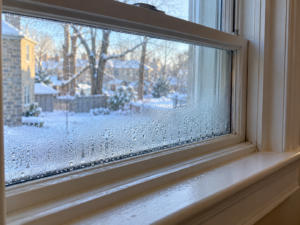
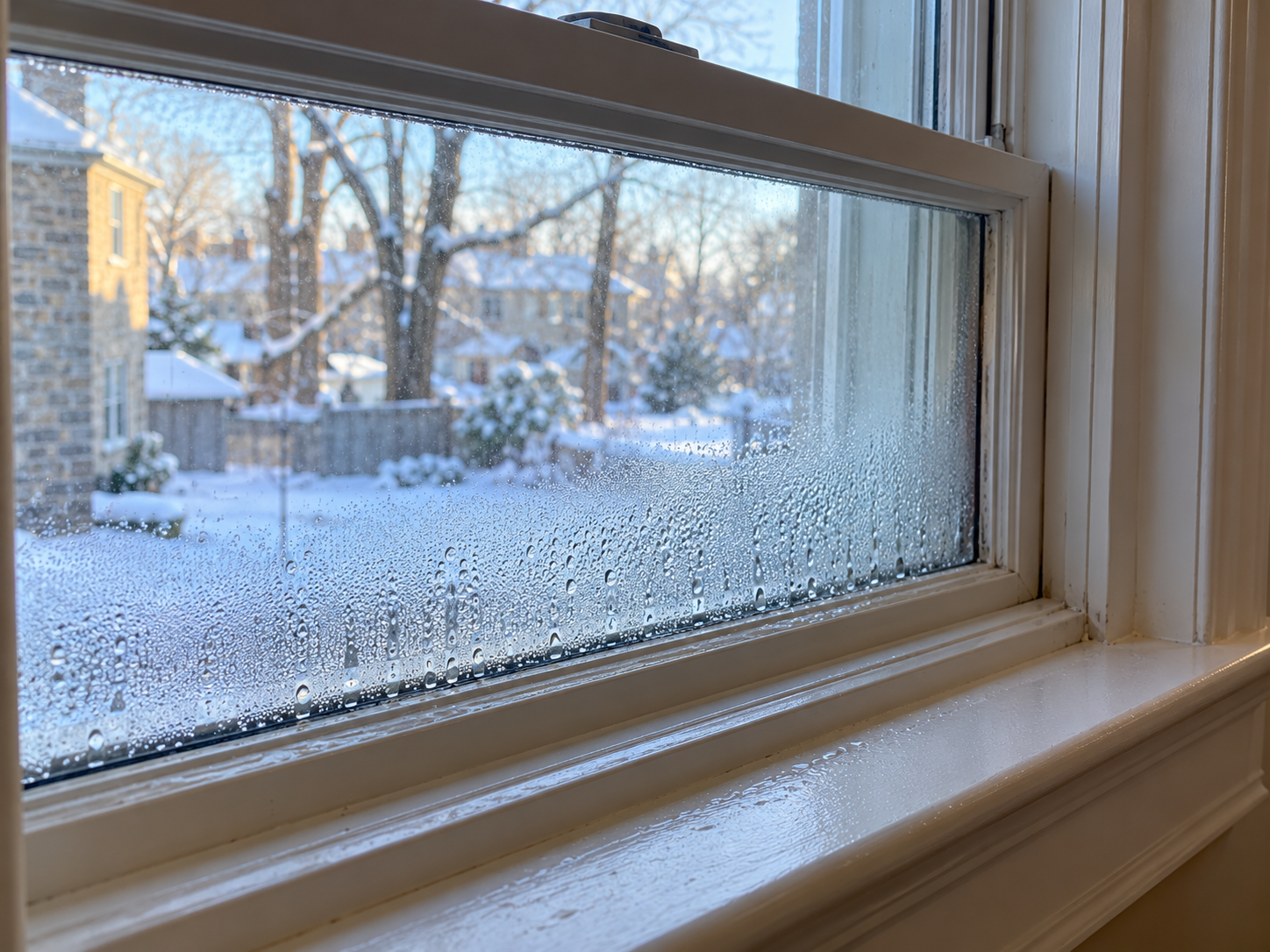
This is the most common type. Water, fog or frost forms on the room side of the glass, usually at the bottom edge, and is worst on the coldest mornings.
•Usual cause: indoor humidity that is too high for the outdoor temperature, combined with a cold window surface.
•Where you see it: bedrooms with closed doors overnight, bathrooms, kitchens, and windows behind heavy curtains.
2. Condensation between the panes
If the fog is trapped between two layers of glass and cannot be wiped off from either side, the seal around the insulated glass unit has failed. Moist air has entered the space between the panes.
•Usual cause: a failed seal, often from age, heat cycling, or a manufacturing issue.
•What it means: the unit has lost much of its insulating performance, and the haze typically gets worse over time.
3. Condensation on the outside surface
Dew on the exterior of the glass on cool, clear mornings is generally not a problem. It often happens with efficient windows, because the outside pane stays cold when less heat escapes through the glass.
Reducing Interior Condensation
If the condensation is on the room side, start with humidity and air movement. ENERGY STAR recommends:
•Making sure the space between the window frame and the rough opening is insulated during installation.
•Choosing window treatments that allow air to flow over the window surface.
•Managing indoor humidity: venting dryers directly outside, making sure kitchen and bath fans vent outdoors, and running fans during showers and cooking and for 20 minutes afterward.
Indoor humidity targets should drop as the weather gets colder. The Center for Energy and Environment publishes a guide suggesting indoor relative humidity below 40% when it is 20 to 40°F outside and below 35% when it is 10 to 20°F. An inexpensive hygrometer helps you see what is actually happening in your home.
Other practical steps:
•Open blinds and curtains during the day so warm room air reaches the glass.
•Keep furniture away from heating registers and radiators near windows.
•Turn down or turn off humidifiers if windows are wet every morning.
•Check that the dryer vent is connected and terminates outdoors.
Signs Condensation Is Causing Damage
Occasional condensation that dries quickly is not a crisis. Repeated, heavy condensation can cause damage over a winter. Look for:
•Peeling paint or soft wood on interior sills and stools.
•Dark staining or mold on window returns, especially plaster returns in older homes.
•Water pooling in the window track of sliding or vinyl windows.
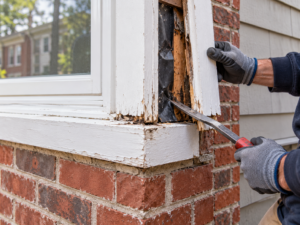
•Rotting wood at the bottom rail of old wood sashes.
•Stains on the wall below the window.
If you see these signs, address the moisture source and dry out the area. If wood is soft, it needs repair before it is repainted.
When the Window Itself Is the Problem
Humidity control is not the answer for every window. Repair or replacement is worth considering when:
•There is fog between the panes. A failed insulated glass unit cannot be fixed by wiping or adjusting humidity. Depending on the window, the glass unit or sash may be replaceable, or the whole window may need replacement.
•Single-pane windows condense heavily all winter. Single-pane glass and old aluminum frames run very cold, so they condense even at moderate humidity. Storm windows can help; replacement with insulated units is a longer-term option.
•Frames feel drafty or are visibly damaged. Air leaking around an old window can cool the frame and glass and make condensation worse.
•Sills and frames are rotting. Water damage in the window or the wall around it needs to be repaired regardless of what caused it.
What to Look For in a Replacement Window
If replacement is the right choice, a few features affect condensation:
•Insulated glass with low-E coatings. These keep the inside glass surface warmer.
•Warm-edge spacers. The spacer between panes affects how cold the glass gets at the edges, where condensation usually starts.
•Frame material. Vinyl, fiberglass and wood frames conduct less heat than uninsulated aluminum.
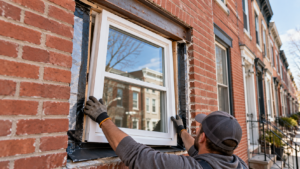
•Proper installation. The gap between the new window and the rough opening should be insulated and sealed, and the opening flashed so water from outside does not get into the wall.
If your home is listed on the Philadelphia Register of Historic Places, window replacement needs Historical Commission review before you order.
Frequently Asked Questions
Is condensation on the inside of my windows normal?
Light condensation on the coldest mornings can happen in many homes. Heavy condensation every day usually means indoor humidity is too high for the outdoor temperature, or the window surface is very cold.
Can a foggy double-pane window be repaired?
The seal cannot be restored, but depending on the window, the insulated glass unit or sash can often be replaced without replacing the whole frame.
Will new windows stop all condensation?
Efficient windows reduce condensation, but they can still condense if indoor humidity is high. New windows also make a home tighter, so ventilation becomes more important.
Why do my windows condense more after I replaced the windows?
A tighter house holds more moisture. Running exhaust fans and controlling humidity usually solves it.
Diagnose Before You Replace
Condensation is often a humidity problem that you can manage inside the house. Fog between the panes, single-pane glass, drafty frames and rotting sills are window problems. Knowing which you have saves you from replacing good windows or living with failing ones.
Philadelphia Exterior Contractors LLC evaluates and replaces windows in older Philadelphia homes. Learn about our window replacement services to schedule an assessment.