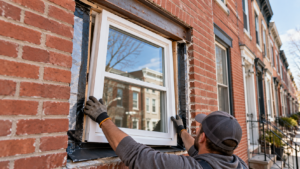
New windows should make a home tighter, quieter, and drier. Yet many Philadelphia homeowners discover water stains below a window sill or swollen drywall returns within the first year after replacement. In row-homes and twins across Roxborough, Mayfair, Germantown, and South Philadelphia, the cause is usually not the window itself. It is how the window was flashed into the wall.
Replacement windows are often installed quickly with a bead of caulk around the exterior. Caulk alone is a temporary seal. Long-term water protection depends on layered flashing that sheds water outward even after the caulk ages.
1. The Core Components of a Watertight Window Opening
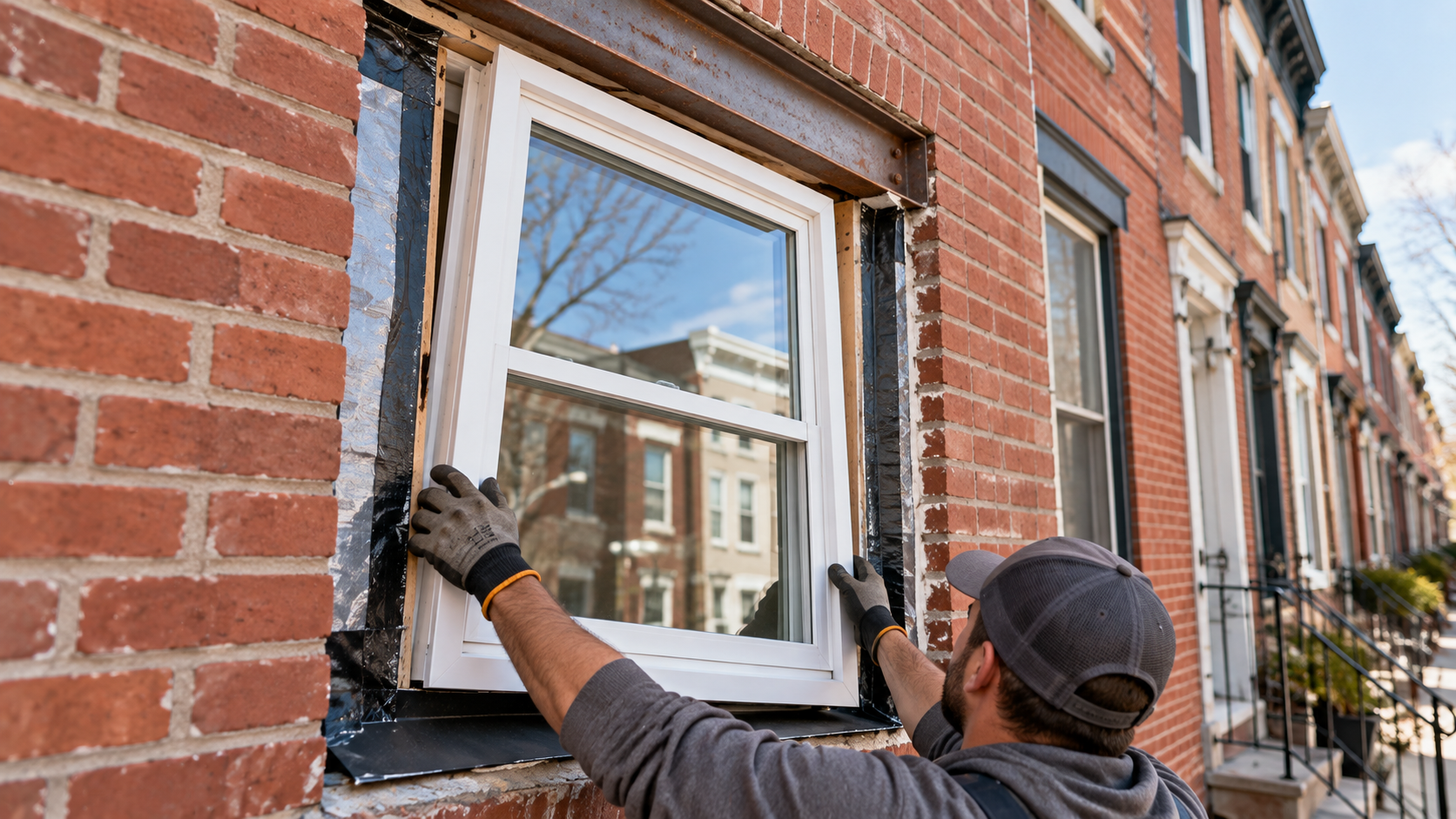
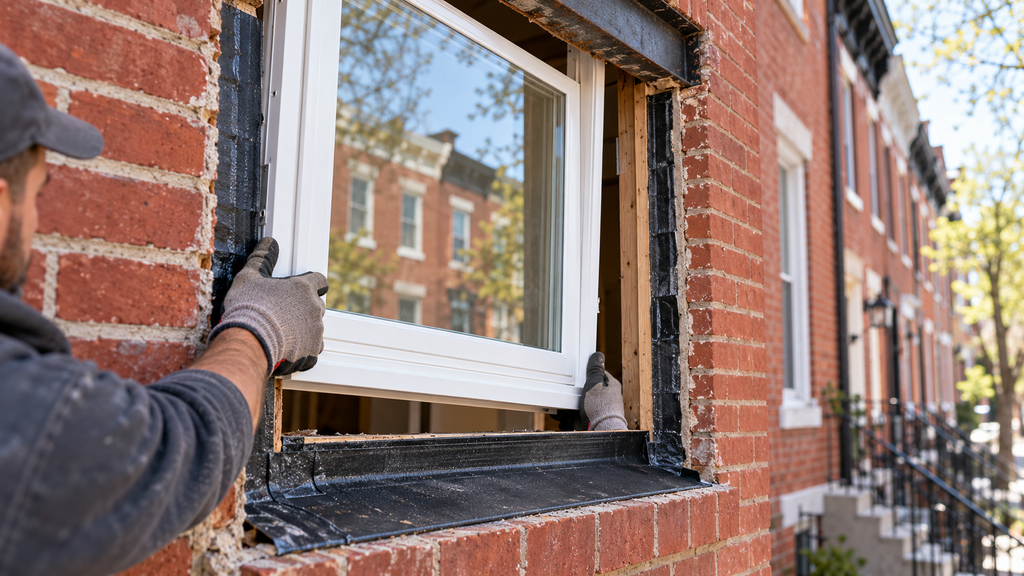
- Sill Pan: A sloped, waterproof pan (pre-formed or built from flexible flashing) under the window that catches water and directs it to the exterior.
- Jamb Flashing: Flashing tape or membrane along the sides of the opening, lapped over the sill pan.
- Head Flashing: Metal drip cap or membrane at the top of the window, lapped under the weather barrier or siding above so water cannot run behind it.
- Shingle-Lap Sequence: Every layer overlaps the one below it, like roof shingles, so water always flows down and out.
2. Brick Openings vs. Siding Walls
Window Opening Inspection Checklist:
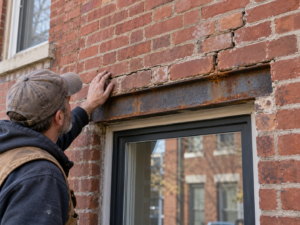
- Brick Masonry Openings: Check the steel lintel for rust and movement, confirm the window is sealed to the brick with a backer rod and quality sealant, and keep the exterior sill sloped away from the window.
- Siding and Frame Walls: Integrate the window flange with the house wrap, and install head flashing before siding or trim is replaced.
- Capping and Trim Wrap: Aluminum coil wrap over old wood frames must not trap water. Rotted sills should be replaced before capping, not covered.
- Weep Holes: Many window frames and sill pans include weep openings. Sealing them shut with caulk traps water inside the frame.
3. Signs of Existing Flashing Problems
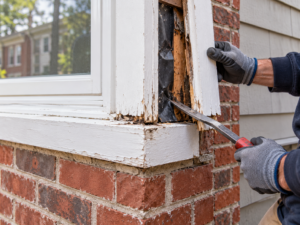
Watch for peeling paint below interior sills, soft wood at the window stool, water inside the window track after rain, and cracked mortar or rust stains near brick lintels. These signs usually point to water entering the wall, not just a failed seal on the glass.
4. Permits and Structural Changes
Like-for-like window replacements are often simpler, but enlarging openings, changing lintels, or modifying exterior walls can require permits, and historic properties may need additional review. Check current Philadelphia building permit requirements before altering a window opening.
Window performance depends on what you cannot see after the job is done. Explore our exterior contracting services to schedule a window and exterior wall inspection with Philadelphia Exterior Contractors.