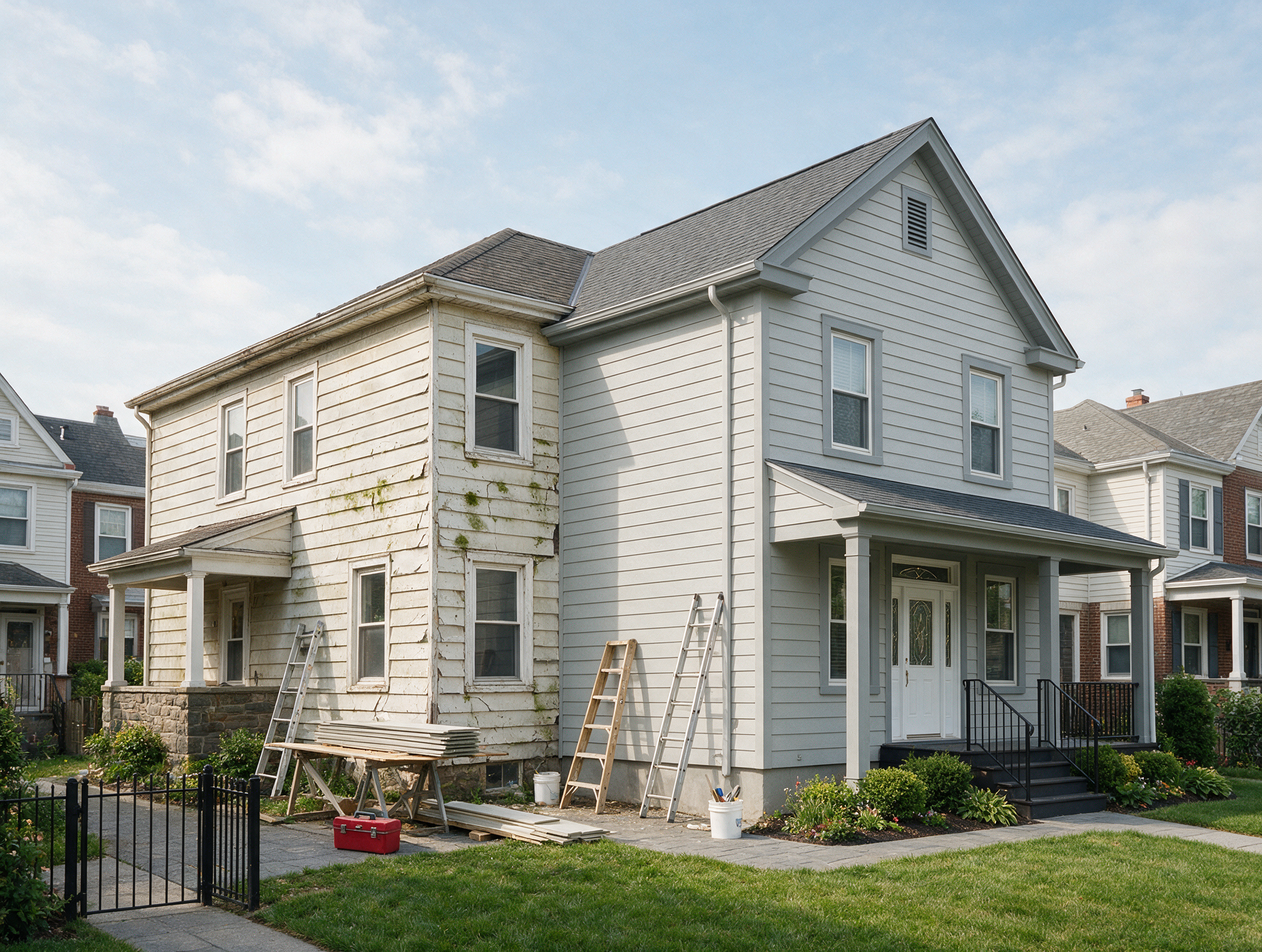
Vinyl vs. Fiber Cement Siding: Longevity in Philly Climates is a practical planning question for property owners in Philadelphia. The right approach depends on the existing conditions, the way the space or system is used, and how the proposed work interacts with surrounding materials. Understanding those details early helps prevent a cosmetic decision from creating a larger construction, maintenance, or code problem later. That review should happen before demolition, fabrication, or installation begins.
Longevity Depends on the Complete Wall Assembly
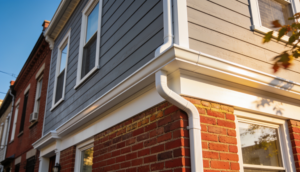
Vinyl and fiber cement siding can both perform well when installed over a sound water-resistive barrier with correct flashing and ventilation details. Product lifespan is not determined by the panel alone. Roof-to-wall intersections, windows, penetrations, fasteners, clearances, and drainage paths often decide whether the cladding remains stable and dry.
Vinyl Moves with Temperature
Vinyl panels expand and contract across their length. Nailing too tightly, restricting end movement, or misaligning locking channels can cause buckling and noise. The material is lightweight and does not require field painting, but impact damage, fading, and wind exposure should be considered for the specific elevation.
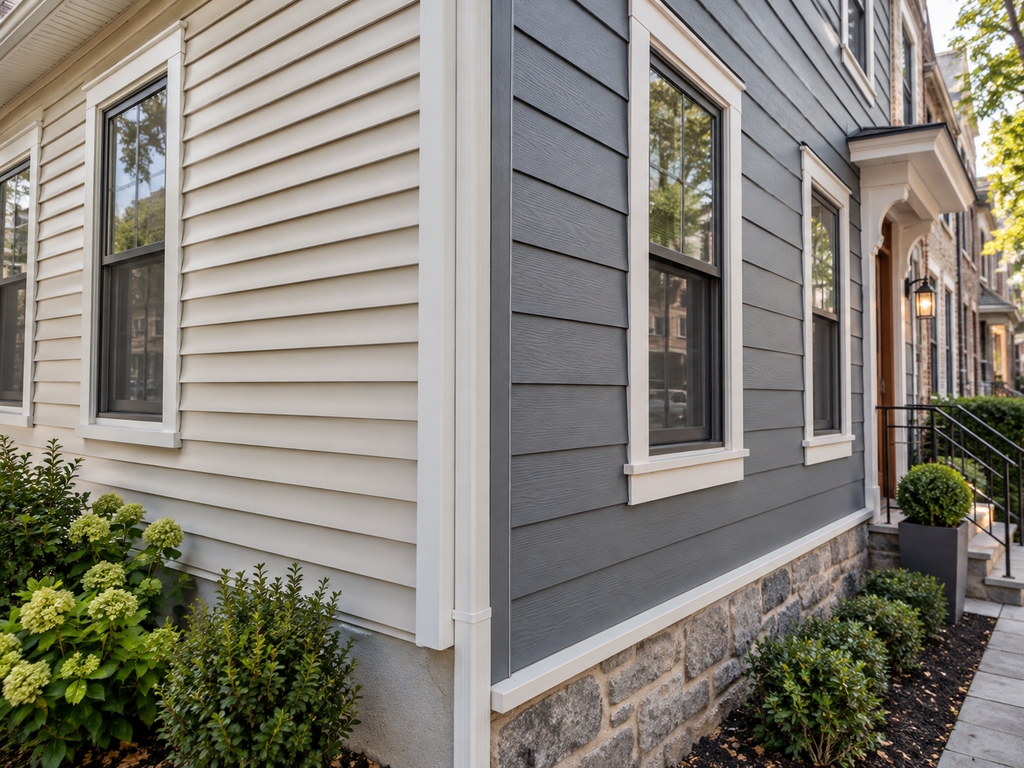
Fiber Cement Requires Cutting and Moisture Discipline
Fiber cement is heavier and more rigid, which can create a substantial appearance and good impact resistance. Proper storage, dust control, fastening, joint treatment, edge clearances, and paint maintenance are important. Panels installed too close to roofs, grade, or horizontal surfaces can absorb repeated moisture and deteriorate.
Compare Maintenance and Detail Quality
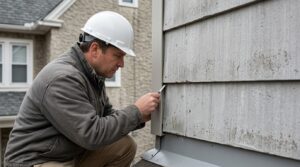
Homeowners should compare finish warranties, repainting expectations, repair methods, accessory profiles, and installer requirements. A premium material cannot overcome missing flashing or rushed penetrations. Reviewing a wall section and manufacturer installation instructions is more useful than choosing only by sample color or advertised lifespan.
Questions to Resolve Before Work Begins
Before comparing proposals, make sure each contractor is pricing the same boundaries, materials, preparation, protection, access, disposal, and finish restoration. Ask which selections must be finalized before work begins, which conditions remain allowances, and which approvals or inspections can affect the schedule. Product data and drawings should match the written scope. This makes it easier to distinguish a genuinely different construction approach from a price difference created by missing work. Record approved samples, model numbers, colors, profiles, and installation requirements in one selection log. The agreement should also explain change-order authorization, progress documentation, cleanup standards, final inspection, and the information the owner receives for maintenance after the project is complete.
Planning the Next Step
Property owners should compare the visible condition with the broader assembly, confirm any permit or manufacturer requirements that apply, and document the proposed scope before materials are ordered. Guidance from U.S. Department of Energy Energy Saver can help frame the technical questions, while an on-site evaluation determines what is appropriate for the individual property. Contact Philadelphia Exterior Contractors to discuss siding or window conditions, material options, and the exterior improvements appropriate for your Philadelphia property.
Learn more about siding installation.
Authoritative external source: U.S. Department of Energy Energy Saver