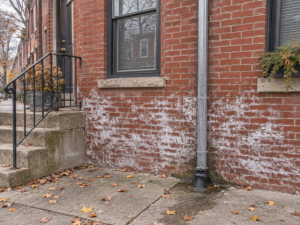
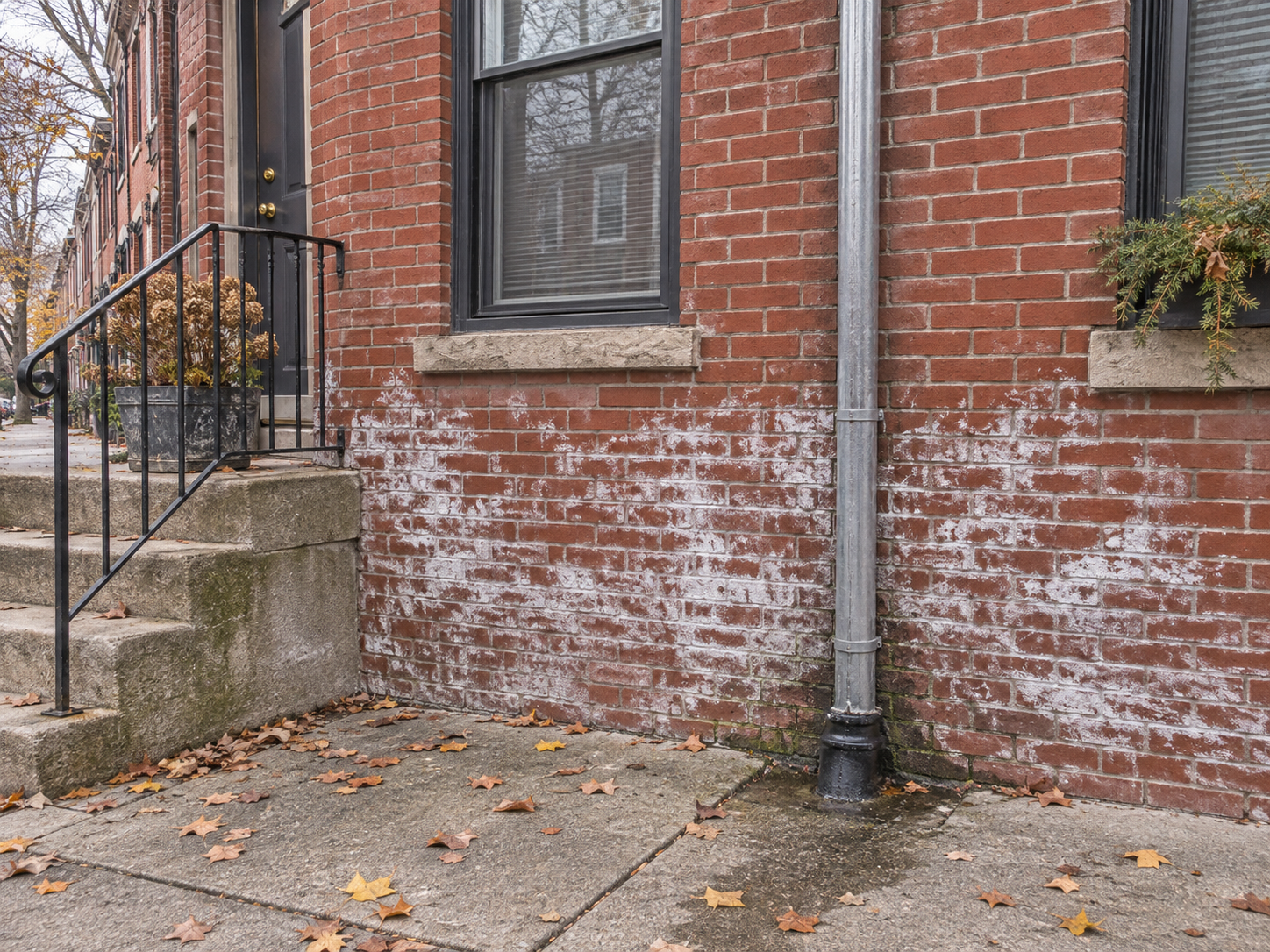
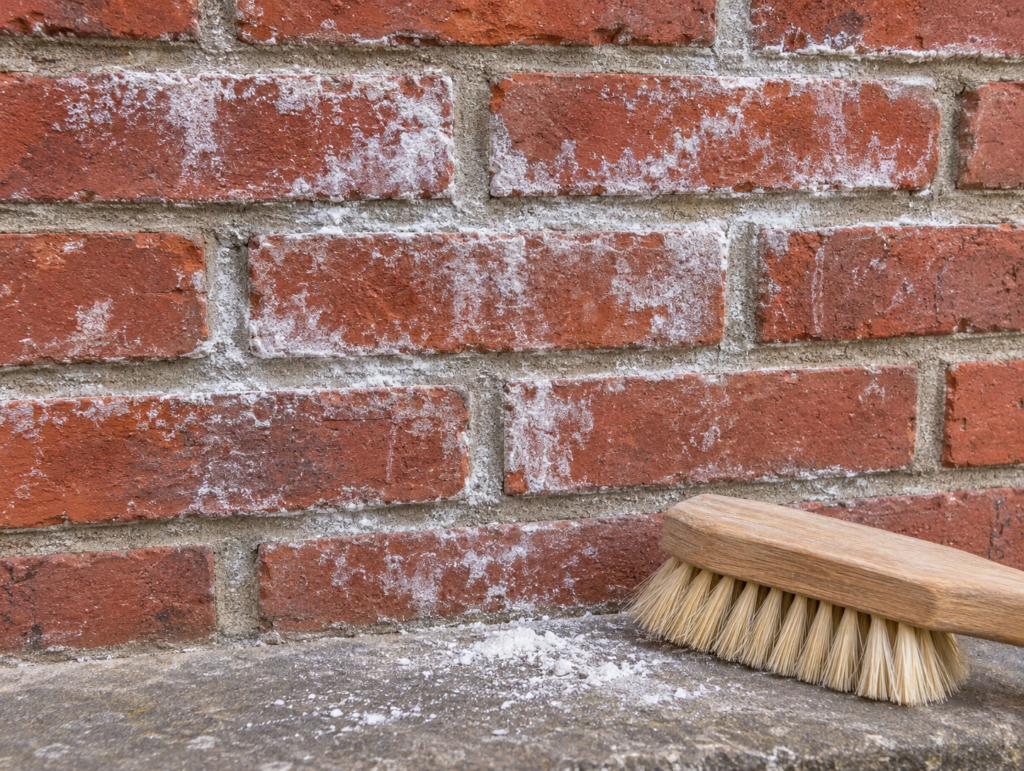
Efflorescence on brick shows up as a white, chalky film on the face of the wall. On rowhomes in Fishtown, Port Richmond, Kensington and South Philly, it often appears low on the front wall, under a window sill or beside a downspout. It can look like paint overspray or frost. In fact, it is salt left behind by water moving through the masonry.
The white bloom is rarely the real problem. Instead, it tells you where water is getting into the brick. So before anyone scrubs the wall, it pays to find that water source first.
What Causes Efflorescence on Brick
The Brick Industry Association’s Technical Note 23A explains that three things must happen together. Soluble salts must be in or touching the brick. Water must dissolve them. Then the water must move to the surface and evaporate, leaving the salts behind.
Late fall and winter make this worse in Philadelphia. Walls stay wet longer, sun is weak and drying is slow. As a result, the white bloom often gets heavier between November and March. Common water sources on older rowhomes include:
- Worn mortar joints. Open or sandy joints let rain soak into the wall.
- Leaky downspouts and boots. Split seams or clogged boots soak the brick right beside them.
- Failed sills and caps. Cracked window sills or wall caps let water run into the brick below.
- Splash and ground moisture. Brick near the sidewalk picks up rain splash and moisture from the soil.
- Sealers that trap water. Non-breathable coatings can hold moisture inside the wall.
How a Pro Inspects Efflorescence on Brick
A good exterior inspection maps the white areas against everything above and around them. We photograph the wall before, during and after any repair, so you can see what changed. A typical check covers:
- Location of the bloom. A patch under one downspout points to a different cause than a band along the whole base.
- Mortar condition. We scratch-test joints for softness, gaps and cracks.
- Gutters and downspouts. We look for leaks, overflow marks and blocked boots.
- Sills, lintels and caps. We check for cracks, missing drips and failed flashing.
- Past coatings. We note any paint or sealer that may be trapping moisture.
Targeted Repair vs. Full Replacement
A targeted repair makes sense when the bloom traces back to one clear source. For example, fixing a leaky downspout, resetting a cracked sill or repointing a small section of joints often stops the problem. Our post on downspout discharge in tight yards covers one common fix.
A full replacement or larger restoration makes sense when salts keep coming back across the whole wall. In that case, the mortar may be failing everywhere, or bricks may be spalling and flaking behind the bloom. Then historic masonry repointing or rebuilding a damaged section is the lasting answer.
Safe Cleaning and Warning Signs
Most efflorescence is water-soluble. The gentlest method comes first: dry-brush it with a stiff natural or nylon brush on a dry day. Avoid wire brushes, pressure washers and strong muriatic acid. These can scar old brick, wash out soft mortar and push more water into the wall. Meanwhile, watch for these signs from the ground:
- Bloom that returns after brushing. Water is still entering the wall.
- Flaking or crumbling brick faces. Salt crystals may be breaking the surface.
- Damp or peeling plaster inside. Moisture is moving all the way through.
- White streaks below sills. The sill or cap above may be failing.
If you are thinking about a water repellent afterward, read our guide to vapor-permeable brick sealants first.
Efflorescence on Brick FAQs
Is efflorescence on brick harmful? The salt itself is usually harmless. However, it signals moisture, which can damage mortar and brick over time.
Will it go away on its own? Light bloom on new work often weathers off. On older walls, it usually returns until the water source is fixed.
Can I wash it off with a hose? Brush it dry first. Water can dissolve the salt and pull it back into the brick.
Should I clean it in winter? Dry brushing is fine. Wet cleaning should wait for warm, dry weather.
Get Your Brick Wall Checked
If white salt keeps showing up on your rowhome, let us trace the water before it does more damage. Explore our exterior repair services or contact Philadelphia Exterior Contractors to schedule a masonry inspection.