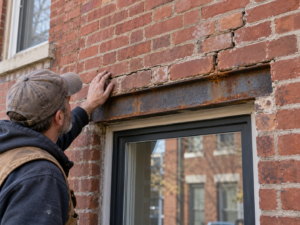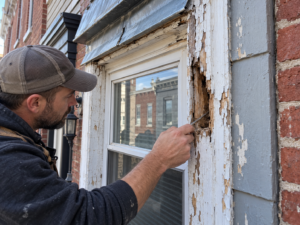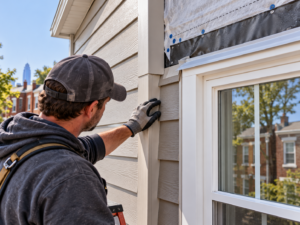
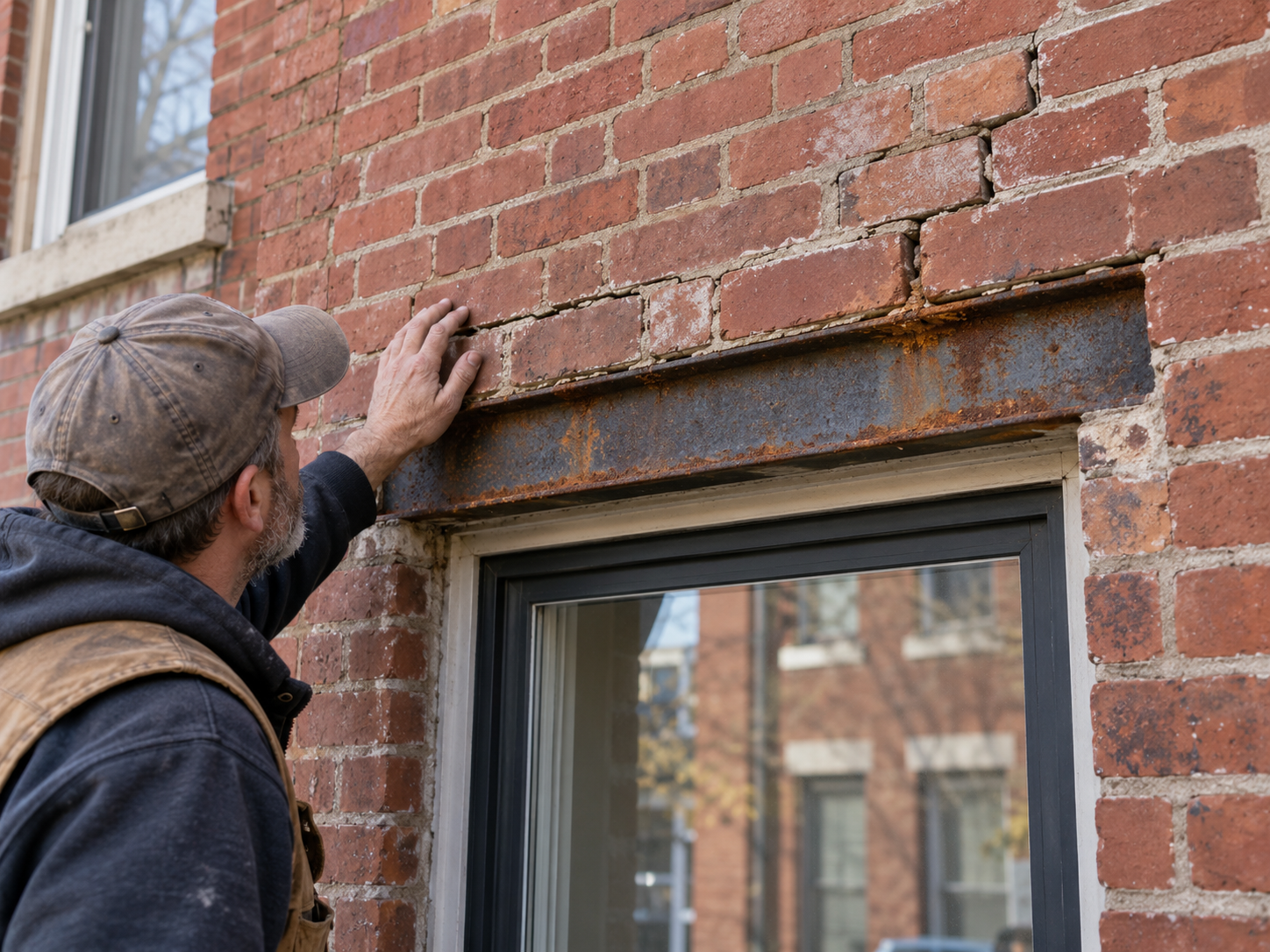
Cracks above a window or door in a brick facade are often blamed on mortar deterioration.
Sometimes that is part of the problem.
But when masonry cracks follow a horizontal opening, another component deserves attention: the lintel supporting the brick above it.
Many masonry openings use steel lintels or angles to carry the weight of the masonry across the window or door.
When that steel corrodes, expansion can place pressure on surrounding brick and mortar.
What a Lintel Does
Brick masonry can support significant compressive loads, but an opening interrupts the wall.
The lintel bridges that opening and transfers the masonry load toward each side.
In some Philadelphia buildings, the steel component may be partly concealed behind brick or trim, making deterioration easy to miss until movement becomes visible.
Philadelphia Exterior Contractors includes masonry and brick wall repair among its exterior services.
Why Corroding Steel Can Move Masonry
Steel expands as corrosion products develop.
That expansion can exert force against the masonry surrounding the lintel.
Homeowners may notice cracking along mortar joints, displaced brick, deterioration immediately above the opening, or rust staining.
The appearance varies depending on the wall construction and the extent of deterioration.
Not every crack over a window proves that the lintel is failing, which is why diagnosis matters.
Water Is Often Part of the Story
Steel corrosion requires moisture.
A repair therefore should not focus only on the visible crack.
The surrounding wall may need to be evaluated for failed joints, poor flashing, open transitions, or other pathways allowing repeated wetting.
Replacing damaged mortar while leaving an active water-management problem may allow deterioration to continue.
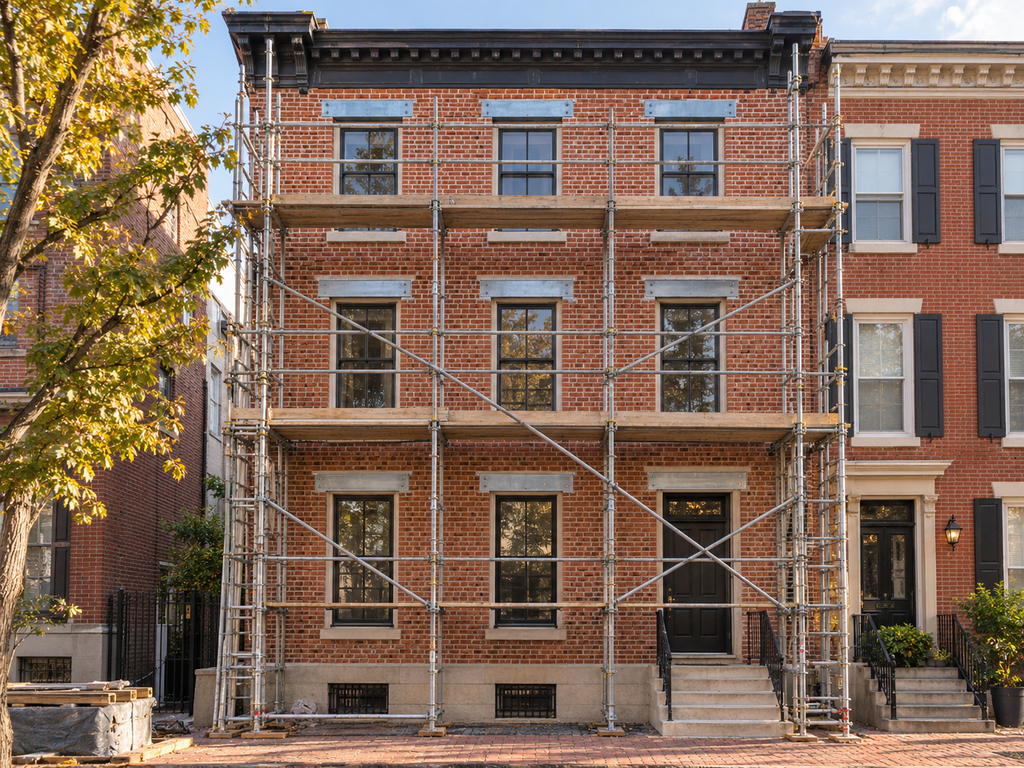
Why Re-pointing Alone May Not Solve It
If the masonry is being displaced by expanding steel, simply filling the cracks with new mortar does not remove the cause.
A more comprehensive repair can require selective masonry removal to inspect the lintel, treatment or replacement of corroded metal where appropriate, restoration of water-management details, and rebuilding the masonry.
The exact scope depends on construction, severity, structural conditions, and applicable requirements.
Historic Facades Require Compatible Repairs
Philadelphia’s brick buildings span many eras and masonry systems.
Replacement mortar should be appropriate for the surrounding masonry rather than selected only for maximum hardness.
Brick color, size, bond, joint profile, and finish can also affect the final appearance.
A structural or engineering evaluation may be appropriate when cracking is extensive, masonry is displaced, or the load path is uncertain.
Do Not Ignore Changes Over Time
One of the most useful homeowner observations is whether a condition is stable or changing.
Photographs taken periodically from the same location can help document whether cracks are widening or bricks are moving.
Loose masonry over a doorway or sidewalk should receive prompt attention because falling material can create a safety hazard.
For larger structural exterior work, owners should also review Philadelphia’s building and repair permit requirements.
FAQ
Does every crack above a window mean the lintel is rusting?
No. Settlement, mortar deterioration, thermal movement, water damage, and other conditions can create cracks.
Can a rusted lintel be painted and left in place?
That depends on its condition and remaining capacity. Cosmetic treatment is not a substitute for evaluating significant corrosion.
Will re-pointing fix lintel-related cracks?
Not if corroding steel is continuing to displace the masonry.
Who should evaluate major movement?
A qualified masonry contractor can identify visible conditions, while significant structural movement may require an engineer.
If brick above a Philadelphia window or door is cracking, shifting, or showing rust staining, have the opening evaluated before treating it as a simple mortar repair.