Rotten trim is often the first visible symptom
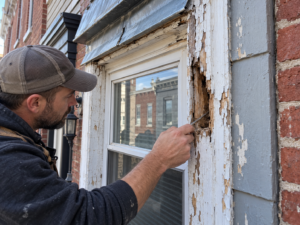
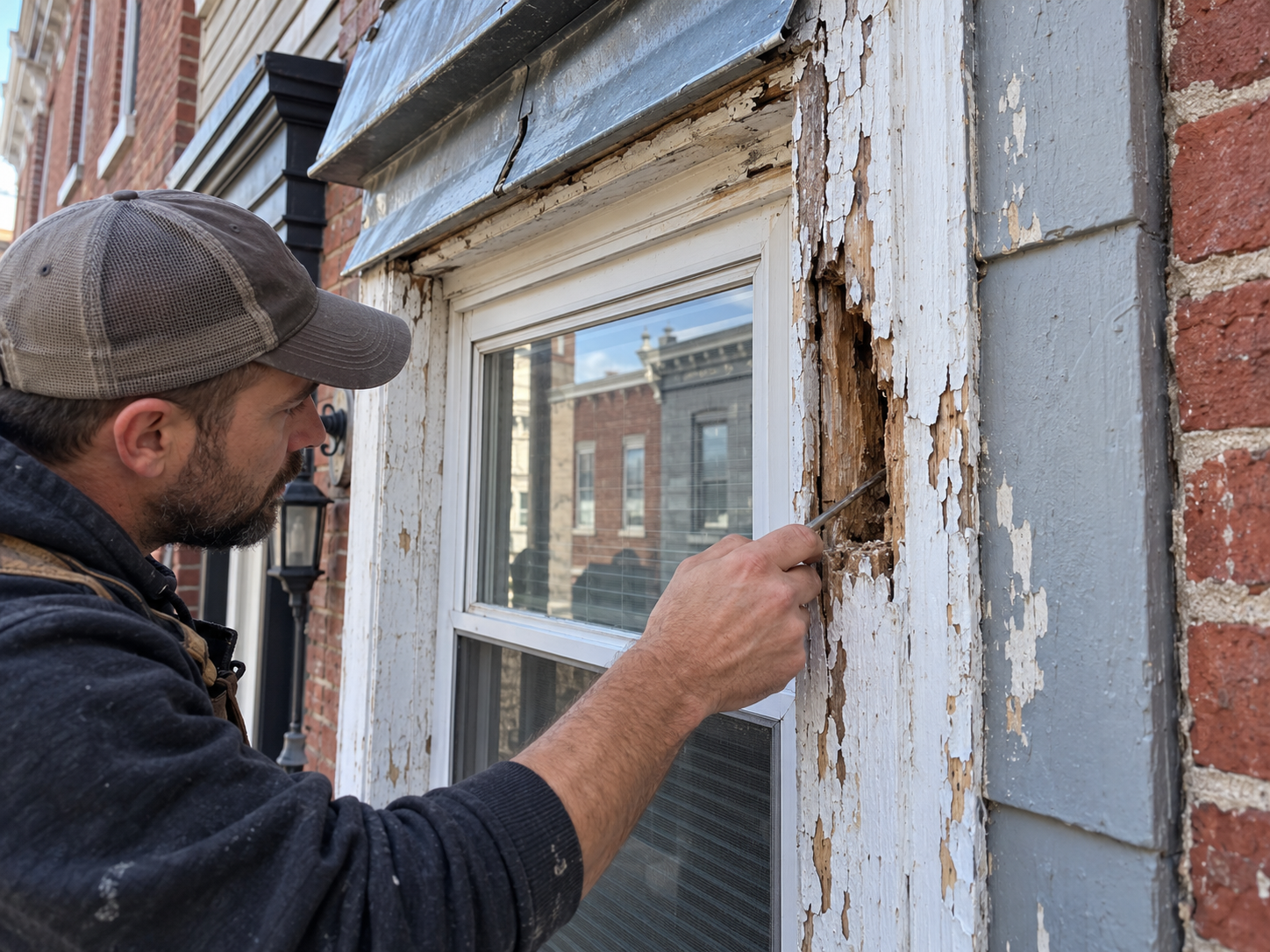
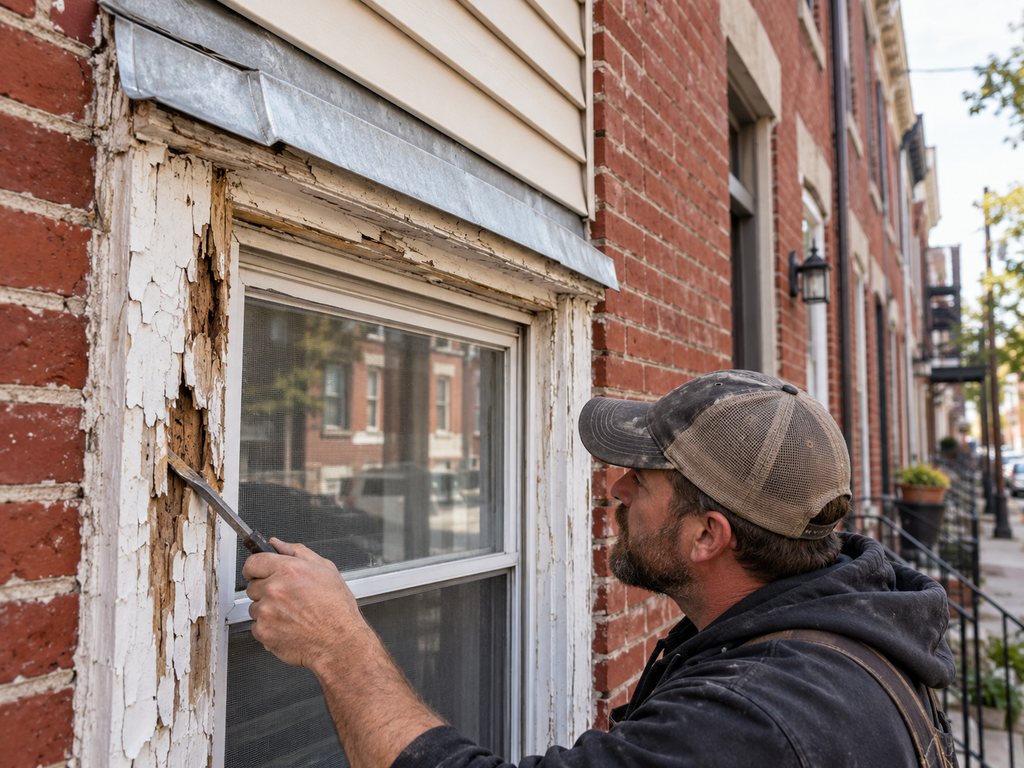
Exterior window trim takes repeated exposure to rain, snow, sun, and temperature changes. When paint fails or water repeatedly reaches the same joint, wood casing can soften, split, or decay. The visible trim may be the only damaged component—but it can also be the first sign that water is getting behind the exterior cladding.
Philadelphia homes combine brick, stucco, vinyl siding, fiber cement, wood trim, aluminum capping, and generations of previous repairs. That makes diagnosis more important than simply covering the damaged wood with filler or new metal.
Start by identifying where the water is coming from
Trim decay commonly appears at lower corners, sills, head casing, and joints where vertical trim meets horizontal surfaces. The contractor should inspect the condition above the damage, not only the rotten spot itself. Missing head flashing, failed caulk, open siding transitions, clogged gutters, or poorly detailed exterior cladding can repeatedly direct water toward the window.
If the source is not corrected, new trim may deteriorate again. A repair should therefore separate the water-management problem from the cosmetic finish problem.
Probe the trim and inspect adjacent materials
Softness at the surface does not reveal how far deterioration extends. A localized trim repair may be enough when the surrounding sheathing, window frame, sill, and wall assembly remain firm and dry. If decay continues behind the casing or into structural framing, the scope may need to expand.
Selective opening can sometimes be more informative than repeated surface caulking. Removing a limited section of trim may expose whether flashing exists, whether the weather-resistive barrier is lapped correctly, and whether previous repairs trapped moisture behind the finish.
Repair, replace, or wrap?
Sound wood with minor surface damage may be repairable after the moisture source is resolved. Severely deteriorated trim is usually better replaced than heavily filled. Replacement material may be wood, PVC/composite trim, fiber cement trim, or another product compatible with the surrounding facade and desired appearance.
Aluminum capping can reduce paint maintenance on suitable trim, but it should not be used to hide wet or rotten wood. Wrapping a damaged assembly without correcting the source can conceal continued deterioration.
Integrate new trim with siding and flashing
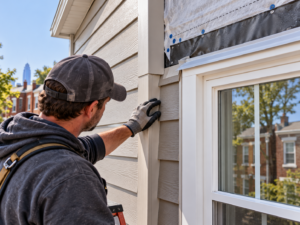
The window perimeter is a transition between multiple systems. New trim should not be treated as a decorative frame independent of the siding or wall. Head flashing, side transitions, sill conditions, sealant joints, and the weather-resistive layer behind the cladding all influence whether water is directed outward.
Different siding systems have different installation requirements, so the repair should follow the actual cladding manufacturer’s details where applicable. The goal is to create a drainage path, not a permanently caulked box around the window.
When the project becomes an exterior envelope repair
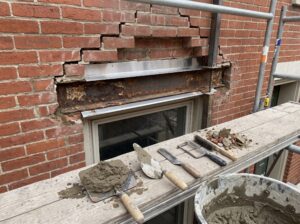
If inspection reveals soft sheathing, recurring interior staining, widespread siding damage, or repeated failures around several windows, the problem may be broader than trim. At that point, a coordinated exterior repair can be more effective than replacing individual pieces one at a time.
Philadelphia Exterior Contractors provides siding, exterior waterproofing, stucco, masonry, and related exterior work. That wider service scope is useful when window trim damage crosses into the wall assembly and requires more than finish carpentry.
Frequently Asked Questions
Can rotten window trim just be filled and painted?
Minor surface damage may be repairable, but soft or deeply decayed wood should be evaluated for replacement and for hidden moisture behind it.
Does new caulk stop window leaks?
Sealant can be part of a repair, but it does not replace properly integrated flashing and drainage details.
Should aluminum wrap go over rotten wood?
Damaged or wet substrate should be corrected before it is covered.