Peeling paint around an exterior window is easy to dismiss as a maintenance issue.
Sometimes it is.
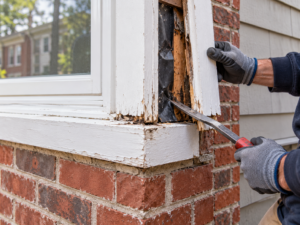
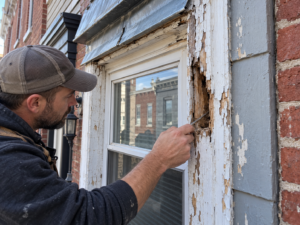
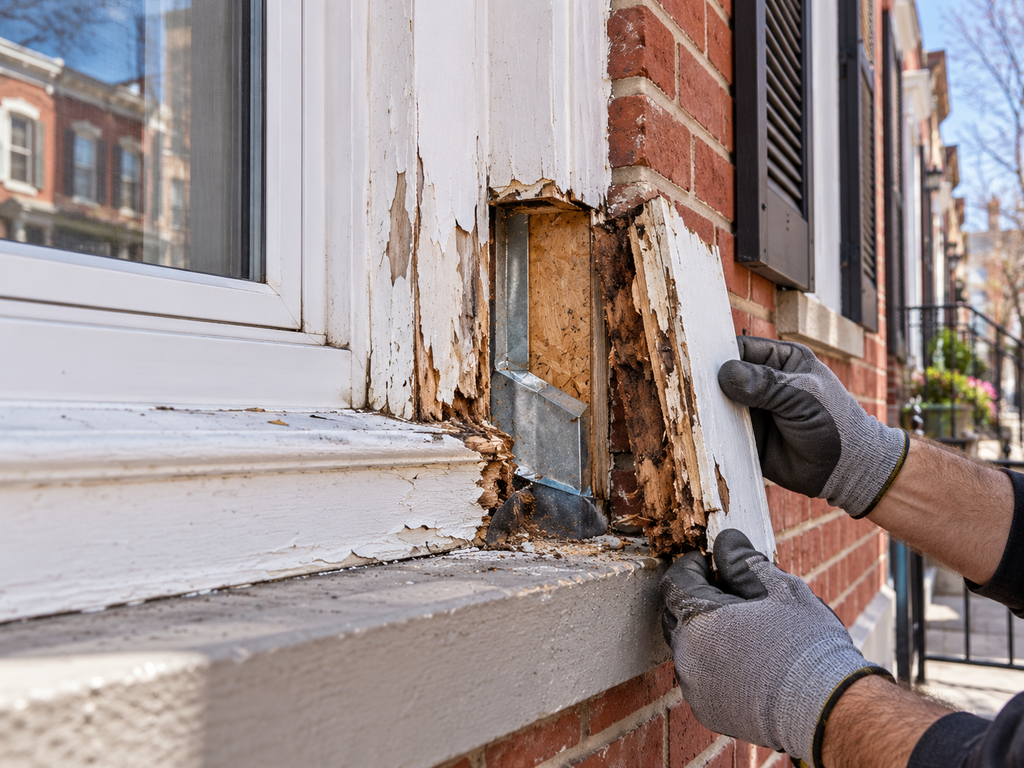
But when a screwdriver can easily penetrate the wood, the trim feels soft, or joints begin separating, the condition has moved beyond ordinary repainting.
Wood decay occurs when the material remains exposed to moisture long enough for deterioration to develop.
Replacing the trim without understanding why it stayed wet can lead to the same problem returning.
Window Trim Is Part of a Larger Exterior Assembly
Exterior casing does not protect the wall by itself.
The window opening also depends on flashing, sealants, weather-resistive barriers, siding or masonry transitions, sill conditions, and drainage details.
Philadelphia Exterior Contractors provides exterior waterproofing, siding, masonry, and repair services that address these intersections as part of the building envelope.
Look at Where the Damage Is Concentrated
The location of decay can provide clues.
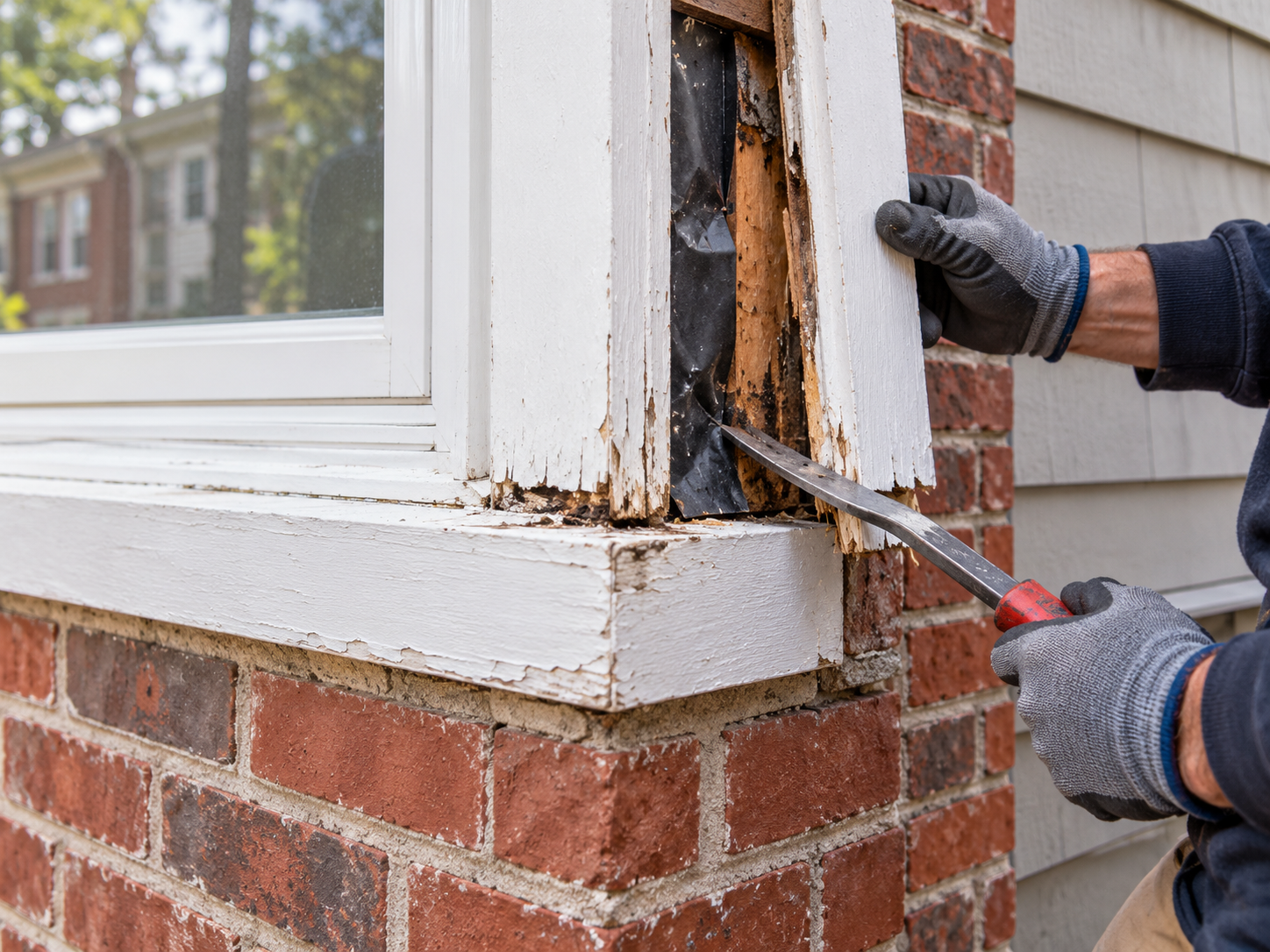
Damage at lower corners may relate to water collecting or failing to drain properly.
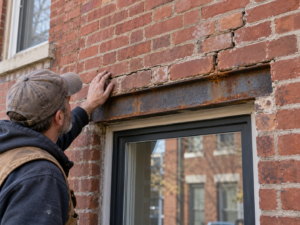
Deterioration along the top can raise questions about head flashing or joints above the window.
Localized rot beside one section may correspond with a failed sealant joint or adjacent cladding detail.
These are clues—not definitive diagnoses.
The entire opening should be evaluated.
Paint Cannot Stabilize Rotten Wood
High-quality exterior paint protects sound wood from weathering, but paint cannot restore wood that has lost structural integrity.
Small localized defects may sometimes be repairable with appropriate restoration products.
More advanced deterioration often requires removal and replacement of affected material.
The contractor should determine how far the decay extends before rebuilding the trim.
Inspect the Sheathing Behind the Trim
Visible casing damage may be limited to the decorative wood.
But if water has been entering behind the opening, wall sheathing or framing may also be affected.
That cannot always be determined from the exterior surface alone.
Removing deteriorated trim can provide an opportunity to inspect the substrate and repair water-management details before new material is installed.
Material Choice Matters
Replacement trim does not always need to be identical to the old material.
Wood remains appropriate in many architectural contexts, especially where historic appearance matters.
Composite or PVC trim products may also be considered in some applications because they resist biological decay differently from wood.
Each material has its own expansion, fastening, finishing, and detailing requirements.
The product should be selected for the building and installed according to manufacturer guidance.
Sealant Is a Joint, Not a Substitute for Flashing
Caulk is important around many exterior transitions.
But simply filling every gap with sealant can interfere with drainage and does not compensate for missing flashing.
The joint needs to be designed so water is directed outward rather than trapped behind the trim.
Repair Before Winter Makes Access Harder
Fall is a practical time to identify exterior trim deterioration because damaged areas are still accessible before harsher winter weather.
Freeze-thaw cycles do not create wood rot by themselves, but wet assemblies exposed to repeated seasonal weather can continue deteriorating.
Addressing the source of moisture is more important than simply making the trim look new.
The U.S. Department of Energy provides general building-envelope guidance through its moisture-control resources.
FAQ
Can rotted window trim just be filled and painted?
Small localized defects may sometimes be repaired, but significantly deteriorated wood generally needs more substantial restoration or replacement.
Does rotted trim mean the window itself needs replacement?
Not necessarily. The window, trim, flashing, and wall assembly should be evaluated separately.
Why does the same corner keep rotting?
Repeated deterioration often indicates that the moisture source was not corrected during previous repairs.
Can PVC trim eliminate the problem permanently?
PVC itself does not rot like wood, but water can still damage materials behind it if flashing and drainage remain incorrect.
When exterior window trim starts deteriorating, treat the rot as evidence—not the entire problem. Philadelphia Exterior Contractors can evaluate the surrounding envelope before rebuilding the visible finish.