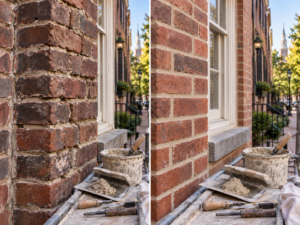
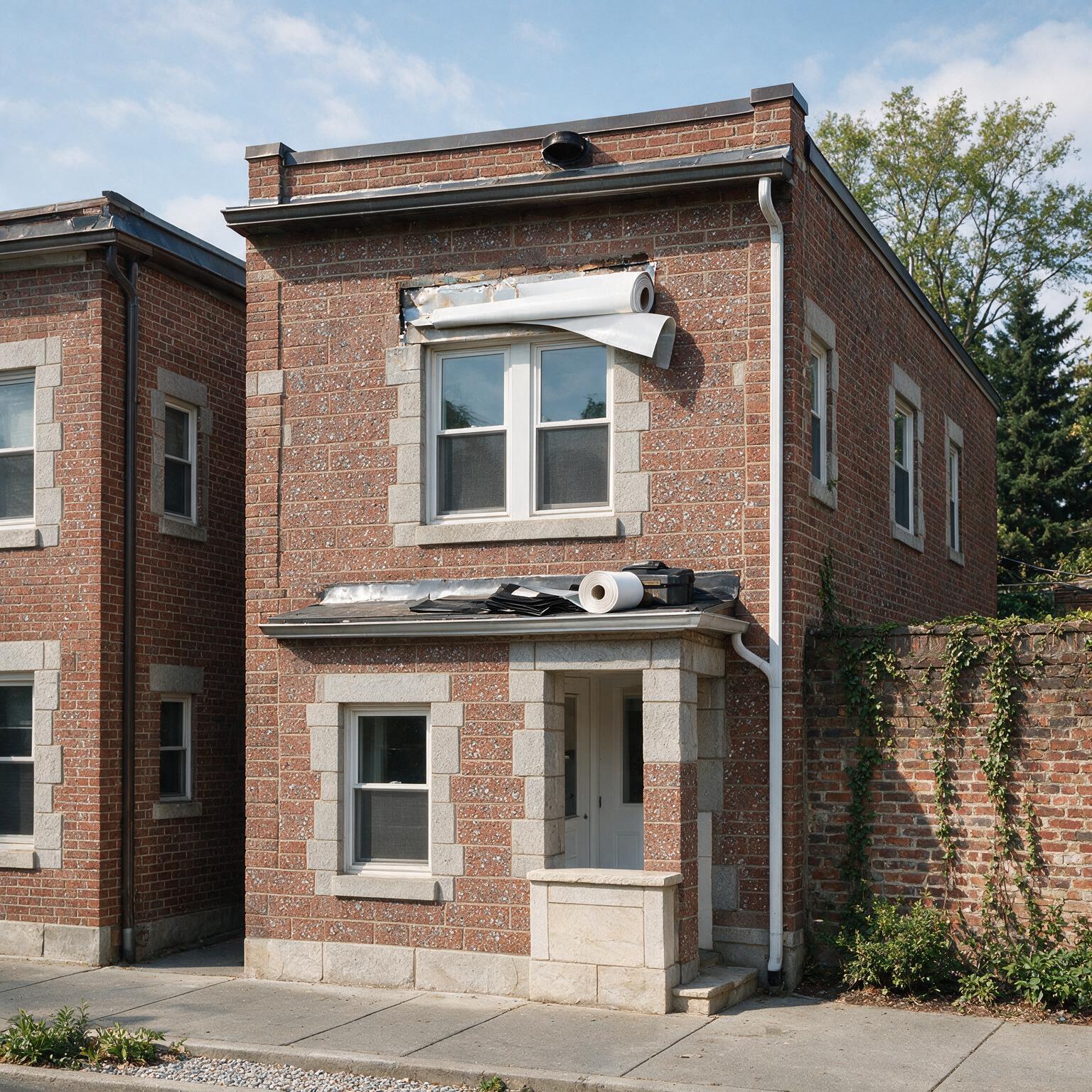
Fresh caulk can stop a small joint leak, but it cannot replace missing or poorly layered flashing. Repeat staining below a window should trigger a review of how water moves around the entire opening.
This decision belongs in preconstruction. Moreover, it guides the exteriors planning to align with budget and schedule.
Property Features by Area
Fishtown and Port Richmond exteriors may combine brick, stucco, siding, metal trim, and replacement windows installed in different renovation cycles.
The result is a varied look that reflects layers from separate renovations and different contractors.
What Local Properties Change
Inspect head flashing, sill conditions, jambs, sealant joints, cladding terminations, staining, soft trim, and any water source above the opening. The visible leak location may not be the entry point.
What to Verify Before Work Starts
Siding and masonry transitions should direct water outward through overlapping layers. Surface sealant is a maintenance joint; it should not carry the entire waterproofing strategy.
How the Finished Work Should Perform
A durable repair restores the drainage path behind the finish so one bead of caulk is not responsible for keeping the wall dry.
Frequently Asked Questions
Can a window leak come from above the window?
Yes. Water can enter higher in the wall, roof, cladding, or flashing and travel before appearing around the opening.
Is recaulk enough?
Sometimes for a localized failed joint, but recurring leaks justify a broader inspection of flashing and surrounding materials.
Do replacement windows need water-management details?
Yes. The installation must integrate with the wall assembly so water is directed away from the opening.
Plan the Next Step
Philadelphia Exterior Contractors can evaluate window transitions, siding, masonry, flashing, and exterior waterproofing as one connected repair.
Helpful source: City of Philadelphia – Get a Building Permit