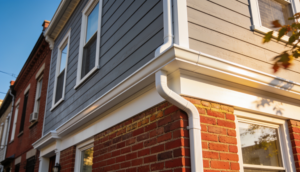
Philadelphia is a city defined by its iconic brick rowhomes. While brick itself can last for centuries, the mortar that holds those bricks together has a limited lifespan. Over decades of exposure to harsh winters, driving rain, and the freeze-thaw cycle, the mortar joints inevitably crack, crumble, and wash away.
When the mortar fails, the wall loses its structural integrity and its ability to repel water. Addressing this deterioration requires expert masonry repair in Philadelphia through a specialized process known as brick pointing (or tuckpointing).
How Failing Mortar Causes Water Damage
Bricks and mortar operate as a breathable system. Mortar is intentionally designed to be softer than the surrounding brick so that when the building naturally settles and shifts, the mortar cracks instead of the brick face. However, when those cracks become severe, they act as funnels, drawing rainwater directly into the wall cavity.
If moisture penetrates the exterior and freezing temperatures hit, the trapped water expands, causing the face of the brick to pop off—a condition known as spalling. Furthermore, prolonged water intrusion will eventually rot the interior wooden floor joists that rest directly within the masonry pockets.
The Professional Brick Pointing Process
Slapping fresh cement over cracked mortar is a catastrophic mistake. It traps moisture and accelerates the destruction of historic brick. Professional pointing requires a meticulous, multi-step approach:
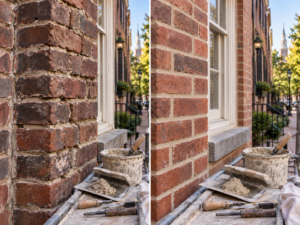
- Grinding the Joints: Technicians use specialized diamond-blade grinders and hand chisels to carefully remove the deteriorated mortar to a depth of roughly 3/4 to 1 inch, ensuring a solid base for the new material.
- Matching the Mortar: Historic rowhomes built before the 1930s require a softer, lime-based mortar. Modern Portland cement is too rigid and will destroy antique bricks. A masonry expert matches both the chemical composition and the color tint of the original mortar.
- Applying and Tooling: The fresh mortar is packed tightly into the cleaned joints in layers. Before it fully cures, it is “tooled” with specialized metal implements to match the original profile—such as a concave or V-joint—which helps the wall shed water efficiently.
Exterior Waterproofing Synergy
Once the pointing is fully cured, treating the entire masonry facade with a breathable, silane-siloxane clear water repellent provides an invisible shield. This exterior waterproofing step prevents the newly restored mortar and the porous bricks from absorbing future moisture, extending the life of the repair by decades.
CTA
Don’t let crumbling mortar compromise your historic rowhome. Contact Philadelphia Exterior Contractors today to schedule a comprehensive masonry evaluation and brick pointing consultation.