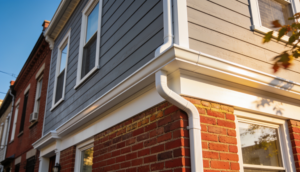
Exterior siding serves as the primary weather-resistant skin of your residential property. In neighborhoods like Port Richmond, Fishtown, and across Northeast Philadelphia, homes endure intense seasonal weather shifts, from driving nor’easters to humid summer heatwaves. When vinyl, fiber cement, or wood siding develops visible flaws, property owners frequently treat the issue as a minor aesthetic nuisance. However, what appears to be a simple surface crack or a slightly loose panel often indicates that the building envelope is no longer performing its defensive function. Distinguishing between cosmetic aging and active cladding failure is essential for protecting underlying structural materials from wind-driven rain and decay.
Recognizing Symptoms of Structural Siding Compromise
While sun fading and minor surface chalking are normal cosmetic realities of exterior aging, physical deformation or movement in the cladding requires immediate investigation. Key warning signs that your siding is failing structurally include:
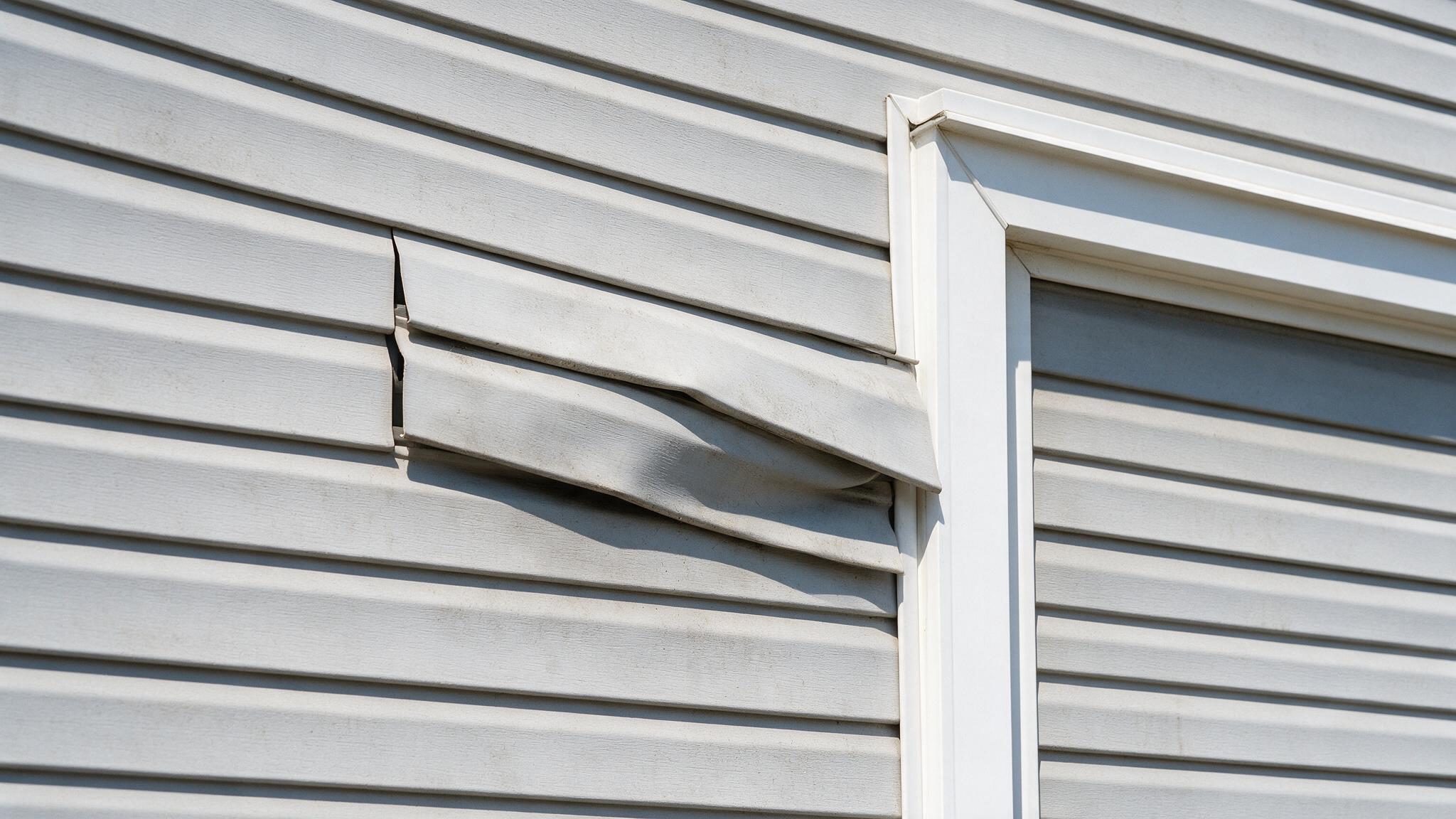
- Warping and Buckling Panels: Siding that bulges outward or looks wavy across a wall section indicates that panels were fastened too tightly without allowing for thermal expansion, or that moisture has saturated the wood sheathing beneath, causing the underlying structure to swell and push against the cladding.
- Loose or Flapping Sections: Panels that rattle, pull away from the wall, or flap during high winds indicate fastener failure or degraded nailing strips. Following FEMA building science and wind-resistance guidance, securely anchored exterior cladding is vital for preventing wind-driven rain from penetrating the building envelope during severe weather events.
- Cracking and Impact Fractures: Hail, windblown urban debris, and accidental impacts can shatter aged vinyl or chip fiber cement. Even a narrow hairline fracture allows bulk rainwater to seep behind the outer shell during heavy storms.
- Organic Staining and Streaking: Dark brown or green vertical streaks appearing beneath overlapping panel joints, window sills, or trim intersections often point to persistent moisture entrapment inside the wall cavity slowly weeping outward.
The Hidden Consequences of Water Infiltration
Siding is designed to shed bulk water, but it relies on a secondary weather-resistant barrier (WRB)—such as house wrap or tar paper—and structural wood sheathing to keep the interior dry. When cracked, warped, or missing siding leaves these underlying layers exposed to the elements, moisture quickly exploits the opening.
Over time, wind-driven rain saturates the oriented strand board (OSB) or plywood sheathing. This constant dampness strips the wood of its structural integrity, leading to dry rot, mold growth, and pest infestation. By the time an interior water stain or musty odor appears inside your living room, the exterior wall sheathing and insulation behind the siding may have been decaying for months.
Evaluating Windows, Trim, and Flashing Transitions
Siding rarely fails in isolation. When evaluating damaged cladding, a specialized exterior contractor examines the entire surrounding wall system. The junctions where siding meets window frames, door casings, corner boards, and masonry foundations represent the most vulnerable points of water entry. If perimeter sealants have dried and separated, or if metal Z-flashing above windows is bent or missing, water will channel directly behind healthy siding panels. A proper repair scope addresses these transition details simultaneously to ensure a completely sealed exterior assembly.
Isolated Panel Replacement Versus Complete Re-Siding
When damage is confined to a small area—such as a single cracked vinyl panel from a fallen tree branch—an isolated repair is often practical. A skilled technician can carefully unlock the surrounding courses, replace the damaged section, and secure the wall without disturbing the broader facade. However, matching older, sun-faded siding profiles and colors can be challenging, as manufacturers frequently retire specific grain patterns and pigments.
When cladding displays widespread brittleness, extensive warping across multiple stories, or underlying sheathing rot, spot patching becomes an inefficient, ongoing expense. In these scenarios, transitioning to full siding replacement allows contractors to strip the walls to the studs, repair rotted sheathing, install modern weather-resistant barriers, and apply durable new cladding.
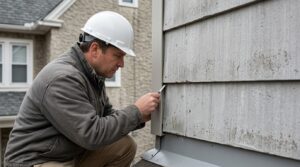
Property owners should avoid climbing ladders or attempting to pry off elevated siding panels to inspect sheathing independently, as working at heights on residential exteriors presents severe fall hazards. Engaging professional siding repair services in Philadelphia ensures your cladding is evaluated safely from the ground to the roofline. If your home exhibits widespread wear, exploring modern siding replacement options will restore your property’s curb appeal and secure its structural envelope against the Mid-Atlantic climate.
Can a single piece of damaged vinyl siding be replaced without removing the whole wall? Yes. Professional exterior technicians use specialized siding removal tools to carefully unclip the overlapping interlocking panels above the damaged section, remove the broken piece, and secure a new panel without disturbing the rest of the wall.
Why is my vinyl siding making a rattling or flapping noise during windy days? Rattling or flapping indicates that the siding panels have come unclipped from their bottom locking channels, or that the mounting fasteners have pulled loose from the underlying wood sheathing, allowing wind to get beneath the cladding.
Does faded or chalky siding mean it needs to be replaced immediately? Not necessarily. Uniform fading and light chalking are natural cosmetic results of ultraviolet solar exposure over time. As long as the panels remain flexible, crack-free, and securely fastened to the wall, fading alone does not impair weather resistance.
Why is it so difficult to find an exact color match for my 15-year-old siding? Siding manufacturers regularly update their product catalogs, retiring older color palettes, grain textures, and panel profiles. Furthermore, existing siding fades over years of sun exposure, meaning even a brand-new panel from the original product line will look noticeably brighter than the surrounding wall.