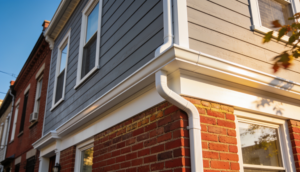
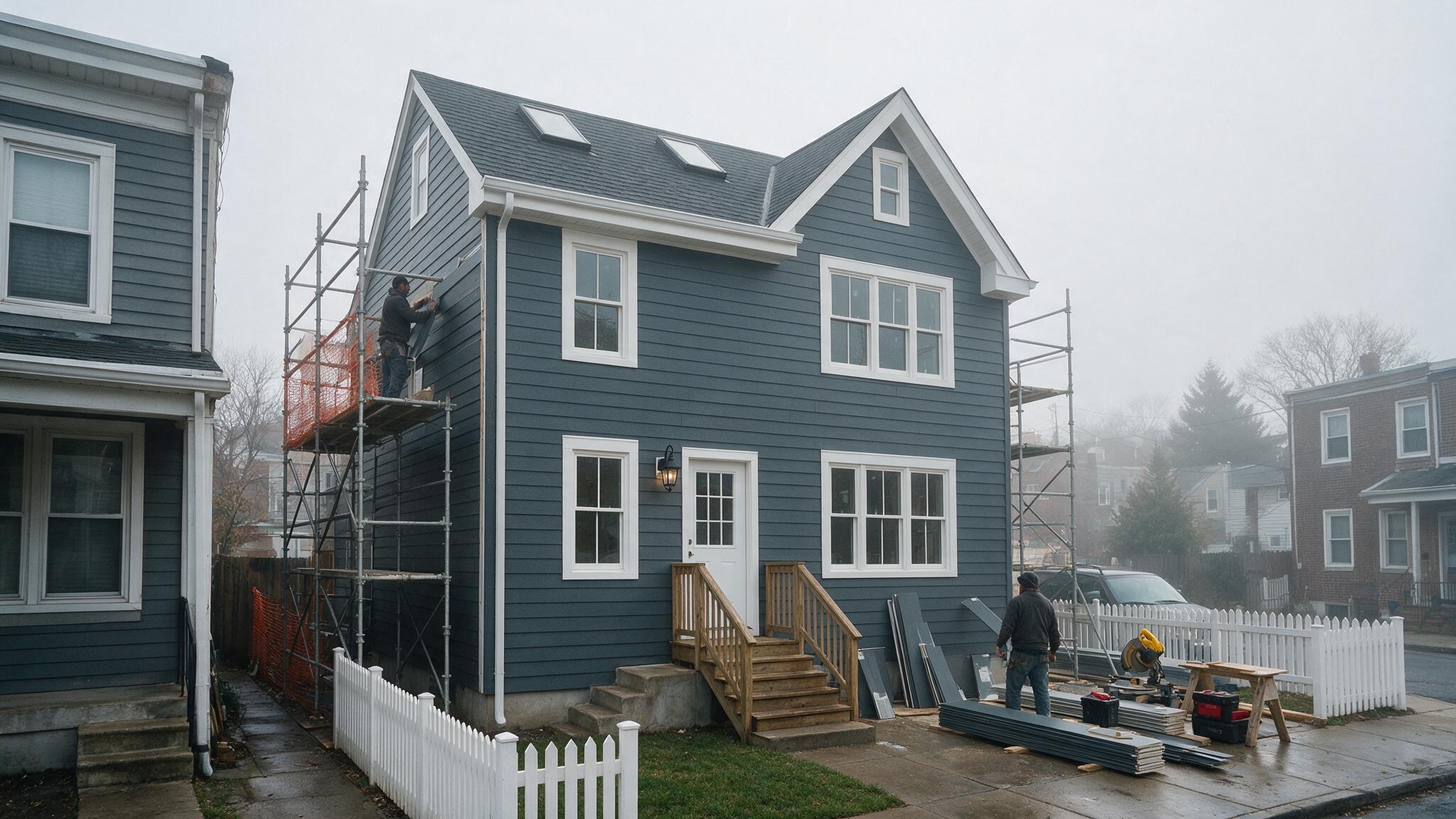
The rear facades and upper bay additions of historic Philadelphia rowhomes are constantly exposed to damp winds, driving rain, and intense summer sun. Traditional wood siding eventually rots, while thin vinyl siding can warp, crack, or melt under reflected sunlight. Upgrading to high-performance fiber-cement siding gives your property long-lasting weather protection, exceptional fire resistance, and a refined appearance that elevates your home’s curb appeal.
Advantages of Fiber-Cement Siding for Urban Rowhomes
Fiber-cement siding—composed of Portland cement, sand, and cellulose fibers—delivers distinct advantages over traditional exterior materials:
- Superior Fire Resistance: Rated Non-Combustible (Class A fire rating), providing an extra layer of safety in dense rowhome neighborhoods where houses share common walls.
- Pest and Wood-Rot Immunity: Wood-boring insects, carpenter bees, and moisture rot cannot penetrate fiber-cement boards.
- Impact and Wind Resistance: Engineered to withstand wind speeds up to 130 mph and resist impact from hail and blowing debris.
- Dimensional Stability: Will not expand, contract, or buckle during severe seasonal temperature swings between summer heat and winter freezes.
Manufacturer specifications from James Hardie Building Products emphasize that installing fiber-cement over high-performance weather-resistive barriers creates a durable defense against driving rain.
+—————————+———————————–+—————————————–+
| Performance Factor | Vinyl Siding | Fiber-Cement Siding |
+—————————+———————————–+—————————————–+
| Fire Resistance Rating | Melts/Distorts under heat | Non-Combustible (Class A Rated) |
| Impact Resistance | Cracks in cold temperatures | High resistance to hail & impacts |
| Color & Finish Life | Fades, difficult to repaint | Factory-baked finish (15+ year warranty)|
+—————————+———————————–+—————————————–+
The Role of Rain-Screen Systems in Rowhome Cladding
When installing fiber-cement siding on older brick or frame structures, proper moisture management behind the boards is essential.
[Existing Sheathing/Brick] —> [Weather Barrier (Housewrap)] —> [Furring Strip Rain-Screen Cavity]
|
v
[Durable Exterior Finish] <— [Fiber-Cement Board Laydown] <— [Air Ventilation Drainage Space]
Installing furring strips creates a 3/8-inch air cavity between the housewrap and siding. This drainage gap allows any trapped condensation to evaporate harmlessly, protecting interior framing studs from long-term rot.
Installation Steps for Fiber-Cement Cladding
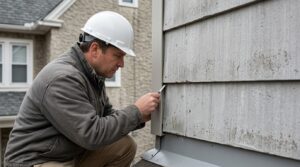
- Substrate Inspection and Preparation: Remove deteriorated original siding and repair any decayed sheathing boards beneath.
- Vapor Permeable Barrier Fitting: Wrap wall surfaces with breathable water-resistive housewrap to block liquid water while allowing indoor moisture vapor to escape.
- Fur-Strip & Trim Installation: Mount vertical furring strips alongside corrosion-resistant aluminum corner and window flashing profiles.
- Precision Blind Nailing: Fasten fiber-cement boards using stainless steel nails set to precise depth specs to prevent face cracking.
Homeowners planning durable exterior upgrades rely on qualified specialists in fiber-cement siding in Philadelphia to ensure lasting performance.
Frequently Asked Questions
Can fiber-cement siding be installed directly over exterior brick?
Fiber-cement should not be fastened directly flush against brick. Furring strips must be anchored to the masonry first to create a flat, back-ventilated frame for securing the siding panels.
How long does factory-finished fiber-cement siding paint last?
Factory-applied baked-on finishes (such as James Hardie ColorPlus Technology) typically resist fading, chipping, and peeling for 15 years or longer before requiring repainting.
Is fiber-cement siding significantly heavier than vinyl?
Yes. Fiber-cement is substantially heavier than vinyl siding, requiring specialized cutting tools and experienced installers to handle boards safely without breakage.
Upgrade Your Exterior Protection Today
Shield your home with fire-resistant, weather-durable fiber-cement siding engineered for urban properties. Philadelphia Exterior Contractors installs premium fiber-cement siding systems across South Philadelphia, Fishtown, and Port Richmond. Contact Philadelphia Exterior Contractors today to schedule an exterior evaluation.