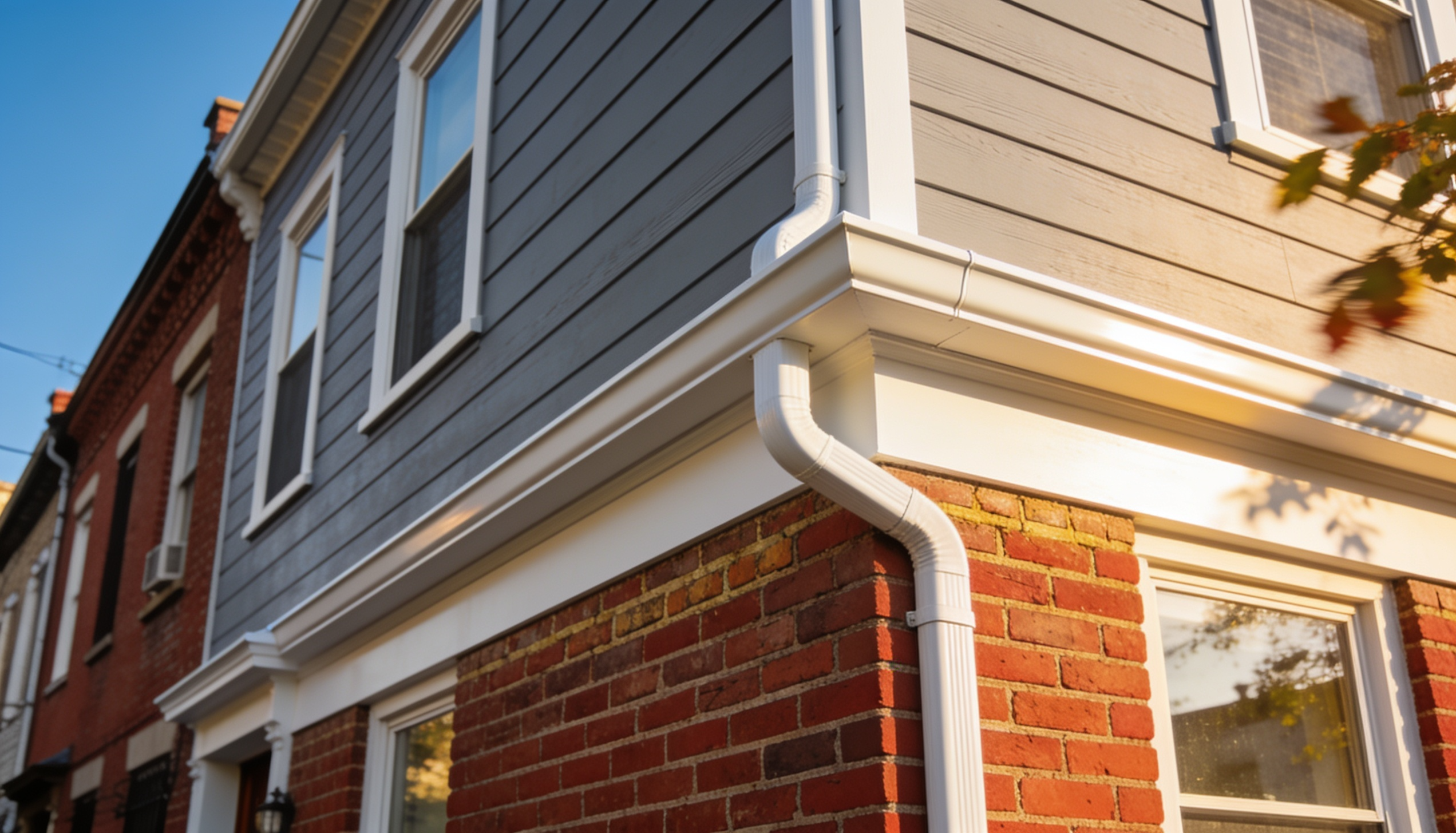
In dense urban neighborhoods like South Philadelphia, Brewerytown, and Fairmount, the traditional attached brick rowhome occupies nearly its entire property footprint. With minimal front yards and compact rear patios, managing stormwater during heavy rain events is a critical structural challenge. Your roof collects thousands of gallons of rainwater annually, and without an effective perimeter drainage system, that water cascades directly down the sides of the building. Gutters and downspouts serve as the primary routing network that intercepts roof runoff and directs it safely away from masonry facades, windows, and foundation walls.
The Mechanics of Urban Exterior Drainage
A functioning residential drainage system operates on gravity and precise horizontal slope. Rainwater flowing off sloped roofs or draining from flat-roof scupper boxes enters the horizontal gutter trough. The trough must maintain a continuous downward pitch—typically one-quarter inch for every ten linear feet—toward the vertical downspout opening. The downspout then carries the concentrated water column down the facade, discharging it onto a splash block, into an underground drain line, or across a paved surface pitched away from the structure.
Adhering to Philadelphia Water Department residential stormwater guidance, controlling surface runoff prevents localized erosion, protects adjacent municipal walkways, and reduces moisture saturation around aging urban foundations.
Common Gutter and Downspout Failures
Over years of exposure to wind, ice, and urban tree debris, drainage systems experience mechanical wear that compromises their flow capacity. Frequent exterior drainage problems include:
- Clogged Troughs and Outlets: Accumulations of leaves, seed pods, and roofing granules create physical dams inside gutters and downspout drop outlets, forcing rainwater to fill the trough and spill over the front and rear edges.
- Sagging and Pitch Reversal: Heavy snow loads, ice dams, or deteriorated mounting spikes can pull gutters away from the wooden fascia board. When a trough sags in the middle, water pools in the depression instead of flowing to the downspout, accelerating metal corrosion and seam leakage.
- Separated Joints and Corners: Traditional sectional gutters rely on sealants at every ten-foot seam and mitered corner joint. UV radiation and thermal expansion dry out these sealants over time, causing steady dripping directly over doorways, walkways, and patio areas.
- Cracked or Split Downspouts: Vertical downspout sections that become clogged with standing water can freeze and split open along their vertical seams during winter, allowing water to spray directly against brick walls during subsequent thaws.
How Drainage Backups Damage Rowhome Masonry and Walls
When gutters overflow or downspouts leak, the resulting cascade of water inflicts significant damage on rowhome exteriors. Water spilling over the back edge of a gutter trough traps continuous moisture against the wooden fascia board and soffit, leading to rapid wood rot and peeling exterior paint.
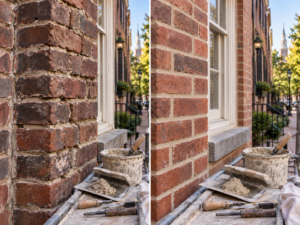
As water pours down a brick facade, it saturates the porous mortar joints. During winter freeze-thaw cycles, this trapped moisture expands, causing the mortar to crumble and the hard outer face of the bricks to crack and pop off—a destructive masonry condition known as spalling. Furthermore, chronic water dumping around the base of a rowhome saturates the soil directly against the foundation, increasing hydrostatic pressure that forces dampness and seepage into subterranean basements.
Differentiating Gutter Issues from Roofing or Stucco Failures
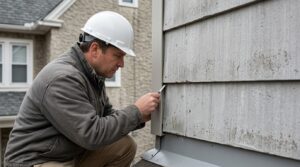
When evaluating exterior moisture or wall staining, property owners must correctly identify the source. While an overflowing gutter can drive water behind exterior siding or rot window headers, repairing or replacing the gutter will not resolve pre-existing building envelope defects.
If water is leaking into a top-floor ceiling due to a failed flat-roof membrane or a damaged flashing transition, installing brand-new gutters will not stop the leak. Similarly, if an exterior wall coated in acrylic stucco has suffered structural moisture penetration due to missing window flashing, drainage improvements alone cannot repair the internal wall damage. Evaluating gutters as part of a connected exterior envelope ensures that drainage repairs complement roofing and masonry systems.
Downspout Extensions and Shared Urban Boundaries
In attached rowhome communities, discharging downspout water responsibly is essential for neighbor relations and property preservation. Downspout kick-out elbows should direct water at least three to four feet away from the building foundation. Where rear yard space is limited, installing aluminum or flexible downspout extensions routes water directly to street alleys or garden drainage zones, preventing runoff from pooling on shared patio slabs or flooding adjacent property foundations.
While property owners should visually inspect their drainage systems from ground level during rainfall to spot overflows and leaks, climbing ladders to clean or repair gutters at two- and three-story urban heights presents severe fall hazards. Relying on professional gutter repair in Philadelphia ensures that sagging troughs are re-pitched, seams are permanently sealed, and secure hangers are installed safely. If your existing system is heavily corroded or damaged, upgrading to custom-extruded seamless gutter replacement provides leak-free reliability tailored to your rowhome’s exact dimensions.
Why do my gutters overflow during heavy rain even after I clean the leaves out? If clean gutters overflow during downpours, the trough may be installed with an improper horizontal pitch that prevents water from flowing to the downspout, the downspout pipe itself may be clogged internally, or the existing gutter size is too small to handle the square footage of your roof.
Can an overflowing gutter cause brick mortar to deteriorate on my rowhome? Yes. When water continuously spills over a gutter and pours down a brick facade, the porous mortar absorbs the moisture. During winter freezing temperatures, the trapped water expands, cracking and crumbling the mortar joints and causing the bricks to spall.
What is the difference between sectional gutters and seamless gutters? Sectional gutters are assembled from pre-cut ten-foot lengths joined together with sealant and mechanical connectors, creating seams that can leak over time. Seamless gutters are custom-extruded on-site from a single continuous roll of aluminum to fit the exact length of your roofline, eliminating mid-run seams entirely.
How far should downspouts extend away from a residential building foundation? Downspout discharge elbows or extensions should direct rainwater a minimum of three to four feet away from the foundation wall to prevent water from pooling around the footing and seeping into the basement or crawl space.