Philadelphia is famous for its vast architecture of red brick rowhomes and historic masonry buildings. For homeowners in West Philadelphia and Manayunk, preserving these brick facades is a critical aspect of exterior maintenance. Before automatically hiring a siding contractor in Philadelphia to cover up an aging exterior with vinyl, property owners should first consider whether their historic masonry simply needs professional restoration. Properly maintained brick is incredibly durable, but the mortar that holds it together has a finite lifespan and requires periodic repointing to prevent structural degradation.
Understanding Mortar Deterioration
Brick is a highly resilient building material, but it is not entirely waterproof. The mortar joints between the bricks are specifically designed to be the weakest part of the masonry system.
The Purpose of Sacrificial Mortar
In historic construction, mortar acts as a sponge, absorbing water that hits the wall and allowing it to evaporate outward. Over decades of enduring wind-driven rain, freezing winter temperatures, and natural building settlement, this mortar slowly deteriorates, cracks, and recedes. When mortar begins to turn to powder or fall out entirely, the brick structure is heavily compromised. Open joints allow water to penetrate deeply into the internal wall cavity, leading to interior plaster damage and mold growth.
The Dangers of Spalling
When open mortar joints are ignored, water inevitably becomes trapped inside the brick face itself. During Philadelphia’s harsh winters, this trapped water freezes and expands, causing the hard outer surface of the brick to crack and pop off. This process is known as spalling. Once a brick spalls, its soft interior core is exposed to the elements, leading to rapid deterioration of the entire wall assembly.
The Repointing (Tuckpointing) Process
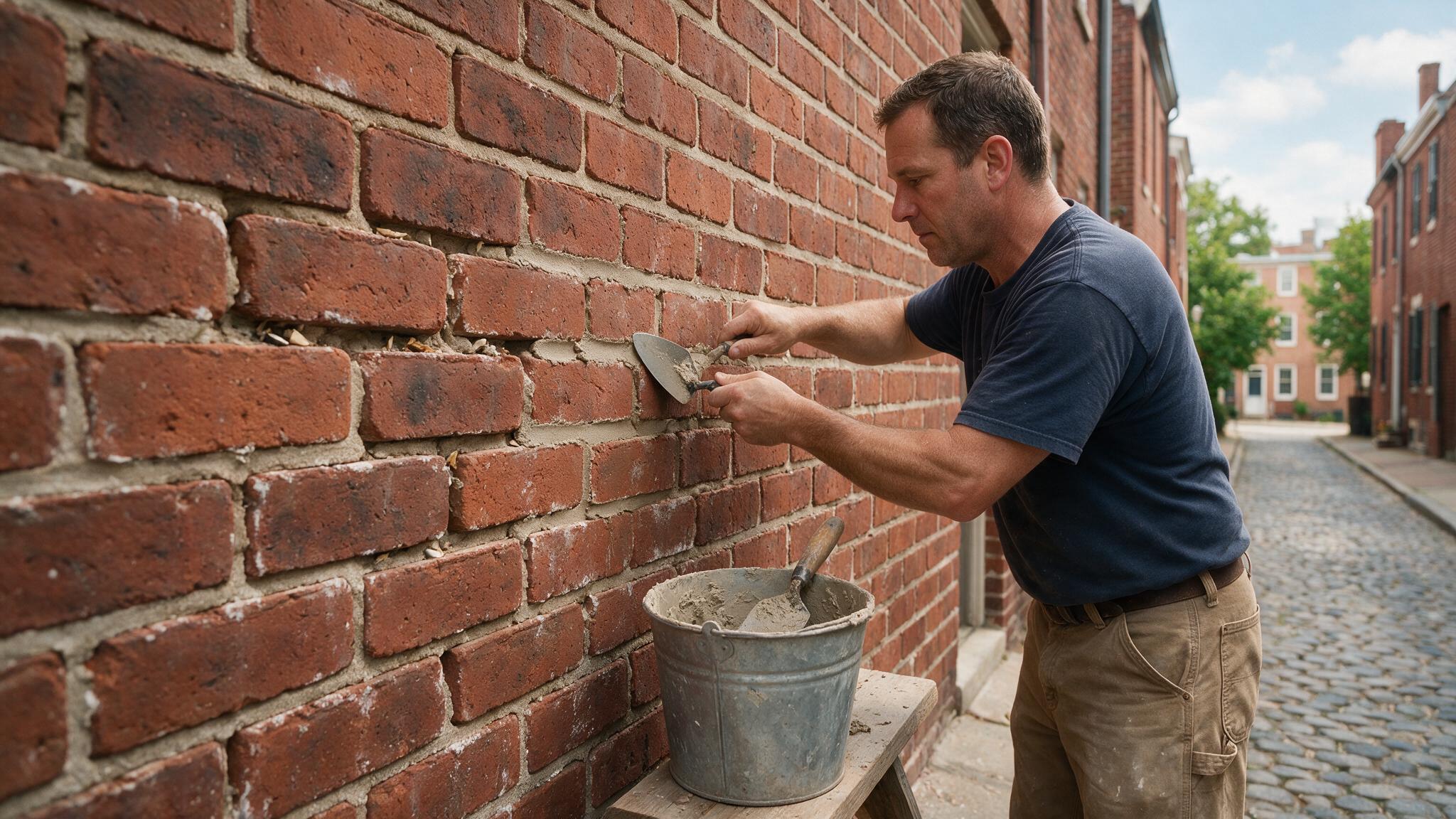
Restoring the structural integrity and aesthetic beauty of a brick wall requires a meticulous process called repointing, or tuckpointing.
Removing the Failing Mortar
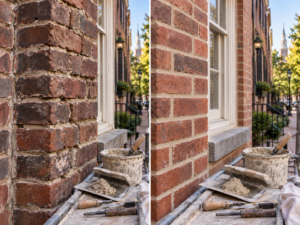
Professional masons begin by safely removing the damaged, crumbling mortar to a depth of roughly three-quarters of an inch. This is done using specialized grinders and hand chisels, ensuring that the surrounding historic bricks are not chipped or damaged during the extraction process.
Matching the Historic Mortar Mix
Applying modern, high-strength Portland cement to a historic brick wall is a catastrophic mistake. Modern cement is too hard and completely traps moisture inside the soft antique brick, accelerating the spalling process. According to the National Park Service’s Preservation Briefs, historic masonry requires a softer, lime-based mortar that allows the wall to breathe and flex safely. Expert masons analyze the existing mortar and create a custom mix that matches the original compressive strength, color, and texture, ensuring a seamless and structurally sound repair.
Combining Masonry with Comprehensive Exterior Upgrades
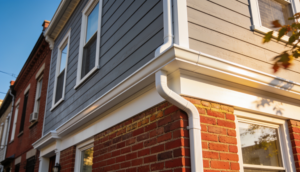
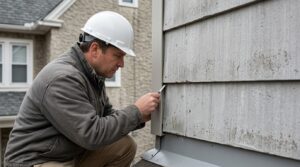
Many properties feature a combination of brick fronts and sided rears or upper-story bays. Addressing the entire building envelope often requires coordinating masonry restoration with targeted siding replacements. Sealing the brickwork properly ensures that water does not travel behind newly installed siding channels.
Protecting Your Historic Facade
Covering a damaged brick wall with siding without addressing the underlying moisture issues only hides the problem while the structure continues to fail. Restoring your masonry improves your home’s structural integrity and preserves its historic charm. To evaluate the health of your brickwork, rely on our team for professional masonry and brick pointing. Contact Philadelphia Exterior Contractors to schedule an expert exterior assessment in West Philadelphia today.
FAQs:
- What is the difference between pointing, repointing, and tuckpointing? “Pointing” refers to the initial finishing of mortar joints in new construction. “Repointing” is the process of replacing deteriorated mortar with new mortar. “Tuckpointing” technically involves using two contrasting colors of mortar to create the illusion of extremely fine joints, though it is often used interchangeably with repointing.
- How often does a brick house need to be repointed? Depending on weather exposure, the quality of the original mortar, and the building’s location, a brick facade typically requires repointing every 50 to 100 years.
- Why is my brick flaking off in large chunks? This is called spalling. It occurs when moisture gets trapped inside the brick and freezes, expanding and breaking the hard outer face of the brick.