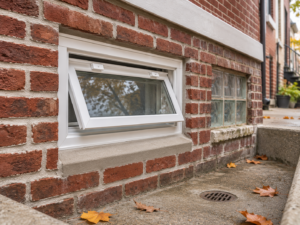
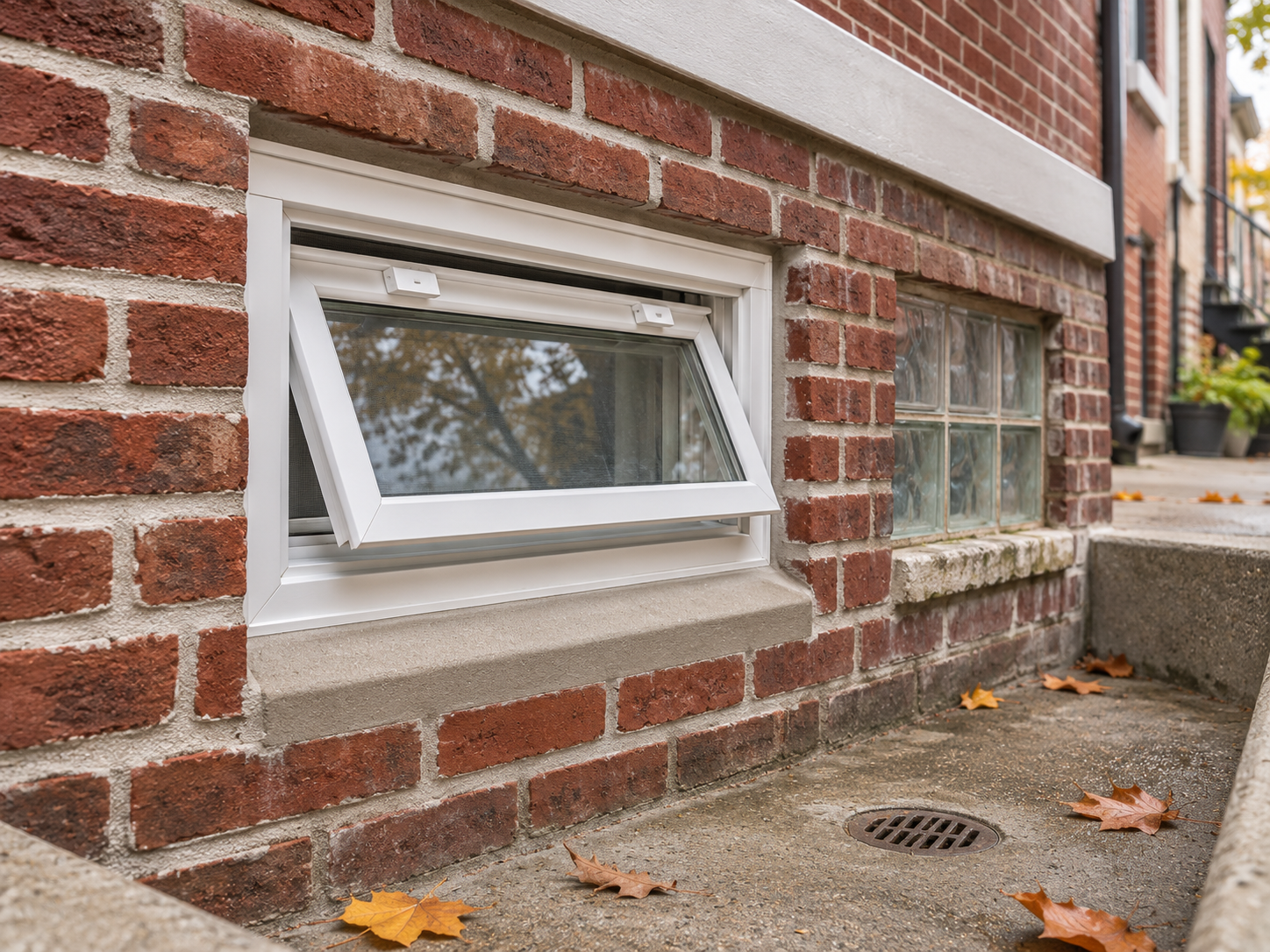
Basement windows are the windows nobody thinks about until something goes wrong. In many Philadelphia rowhomes and twins, they sit at ground level along the front or rear wall, sometimes in a small areaway below the sidewalk. Over decades they take a beating from rain, snow, splash-back, leaves and, in some cases, attempted break-ins.
Homeowners usually notice a problem when the basement feels colder than it should, a musty smell appears, a wood frame turns soft, or water stains show up below the sill. Others simply want better light and security in a basement they use for laundry, storage or a future finished space.
This guide explains the common types of basement windows in Philadelphia homes, the signs that replacement makes sense, and how to compare new windows using the NFRC label.
Common Basement Window Types in Philadelphia
- Old wood or steel hopper windows. These hinge at the bottom and tilt inward. Many are original or decades old, with rotted wood, rusted steel, single glass and loose putty.
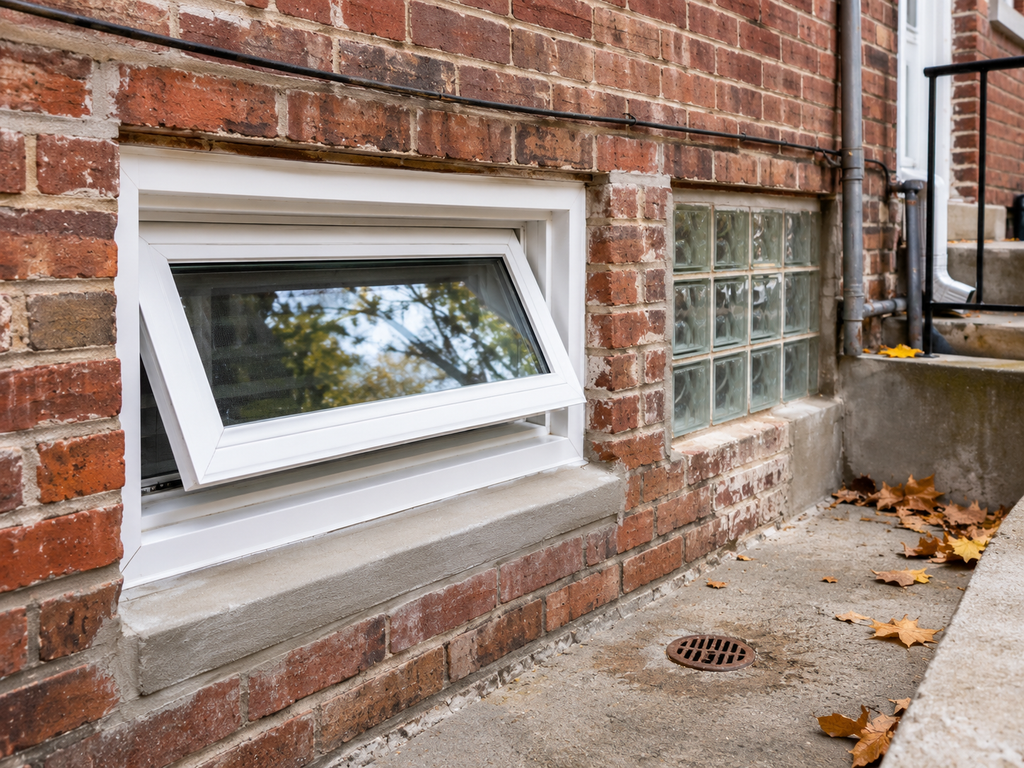
- Glass block. Many owners replaced old basement windows with glass block for security. It lets in light, but often no air, and older installations can crack or lose mortar.
- Vented glass block. A glass block panel with a small vent or opening section.
- Vinyl replacement windows. Hopper, slider or fixed vinyl windows made to fit the existing opening.
- Boarded or bricked-in openings. Some basements have windows that were covered or filled years ago.
Signs It May Be Time to Replace
- Soft, rotted or crumbling wood frames or sills.
- Rusted steel frames or glass that rattles.
- Cold drafts or noticeable air leaks.
- Condensation, water stains or efflorescence (white powder) below the window.
- Cracked glass block or missing mortar around blocks.
- Windows that will not open, close or lock.
- A basement you plan to finish, where better light and ventilation matter.
Glass Block or a New Window?
Both are reasonable choices, and the right one depends on how you use the space.
Glass block may suit you if:
- Security is the main concern, especially at the street side.
- You do not need the window to open.
- You want light but more privacy.
A new operable window may suit you if:
- You want fresh air and ventilation for a laundry area or workshop.
- You want a clear view and more natural light.
- You are planning to finish the basement and want it to feel more like living space.
A vented glass block panel can be a middle option. In some homes, the right answer is glass block on the street side and an operable window at the rear.
If the basement will include a bedroom, egress rules apply. Egress windows have specific size and opening requirements and usually involve a larger opening and a window well. That is a separate, larger project, and the local code official has the final word.
What to Look For on the NFRC Label
When you compare replacement windows, the label is your friend. The National Fenestration Rating Council (NFRC) describes itself as the trusted, independent, nonprofit certification body for the energy performance of windows, doors and skylights. NFRC explains that its label helps you compare energy-efficient windows, doors and skylights by providing energy performance ratings in multiple categories.
For a basement window, a few ratings matter most:
- U-Factor. How well the window keeps heat in. Lower is better for cold basements.
- Air Leakage. How much air passes through the window. Lower means fewer drafts.
- Visible Transmittance. How much daylight comes through. Higher means a brighter basement.
- Solar Heat Gain Coefficient (SHGC). How much heat from the sun enters. This matters less for small basement windows that get little direct sun.
Comparing labels side by side helps you choose a window that will actually perform better than the one it replaces.
Installation Details That Matter at Ground Level
Basement windows sit close to soil and splash water, so installation details matter as much as the window:
- Rotted framing. Any rotted wood buck or framing around the opening should be repaired or replaced before the new window goes in.
- Masonry repair. Crumbling brick or stone around the opening may need repointing or rebuilding.
- Sealing and flashing. The joint between the window and the masonry needs proper sealing so water does not get behind the frame.
- Sill slope. The exterior sill should shed water away from the window.
- Areaway drainage. If the window sits in an areaway or well, its drain should be clear so water does not pool against the glass.
- Grade and downspouts. Soil and downspouts that send water toward the window can cause repeated problems.
Security Options
Because basement windows are close to the ground, security matters. Options include:
- Glass block, which is hard to break through.
- Windows with secure locks.
- Laminated or tempered glass, where appropriate.
- Exterior security bars installed with release mechanisms where required for safety.
Talk about security and ventilation together so you do not lose one for the other.
Why Basement Windows Matter More Than Their Size Suggests
Basement windows are small, but they influence how the whole house feels. A leaky basement window lets cold air in at the lowest point of the house. Because warm air rises and escapes through upper floors, that cold air can be pulled into the basement and up through the home, a pattern often called the stack effect. Sealing and replacing drafty basement windows can make the floors above feel less drafty, too.
Basement windows also affect moisture. Older frames that let rain in, or that sit in wet areaways, can keep the surrounding masonry damp. That moisture can lead to musty odors, efflorescence and peeling paint on basement walls. Replacing a failing window and correcting the drainage around it helps the basement stay drier.
Finally, basement windows matter for light and use. A dark, sealed basement feels like storage. A basement with clean, clear windows can feel usable for laundry, a workshop, a home gym or a future finished room.
Questions to Ask Before You Choose
- Do I need ventilation, security, light, or all three?
- Will the opening need masonry repair before installation?
- Is the window going into an areaway, and does that areaway drain properly?
- What are the NFRC ratings of the window you recommend?
- How will the window be sealed to the masonry?
- If I plan to finish the basement later, does this window still make sense?
Answering these questions with your contractor helps you choose a window that fits how you plan to use the space now and later.
Frequently Asked Questions
Should I replace glass block with a new window? If you want ventilation, a clearer view or a brighter basement, a new operable window may be better. If security is the main goal, glass block may still make sense.
Are basement windows worth replacing? If they are drafty, rotted or leaking, replacing them can make the basement more comfortable, drier and easier to use.
What should I look for on a window label? Check the NFRC label for U-Factor, Air Leakage and Visible Transmittance to compare energy performance between windows.
Can a basement window be made bigger? Sometimes, but enlarging an opening in a masonry wall is a structural change that may need engineering and permits.
Better Basement Windows Start With a Good Assessment
Whether you choose glass block or a new operable window, the result depends on careful installation at the opening. Philadelphia Exterior Contractors LLC can assess your basement windows, explain your options and install replacements built for ground-level conditions. Learn more about our window replacement services in Philadelphia.