Rear additions on Philadelphia rowhomes take a beating from wind-driven rain. In Point Breeze, Passyunk Square and Grays Ferry, many of these additions still have old siding nailed directly to the sheathing. Rainscreen siding adds a small air gap behind the cladding, so water can drain and walls can dry.
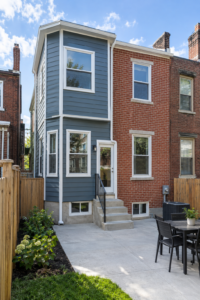
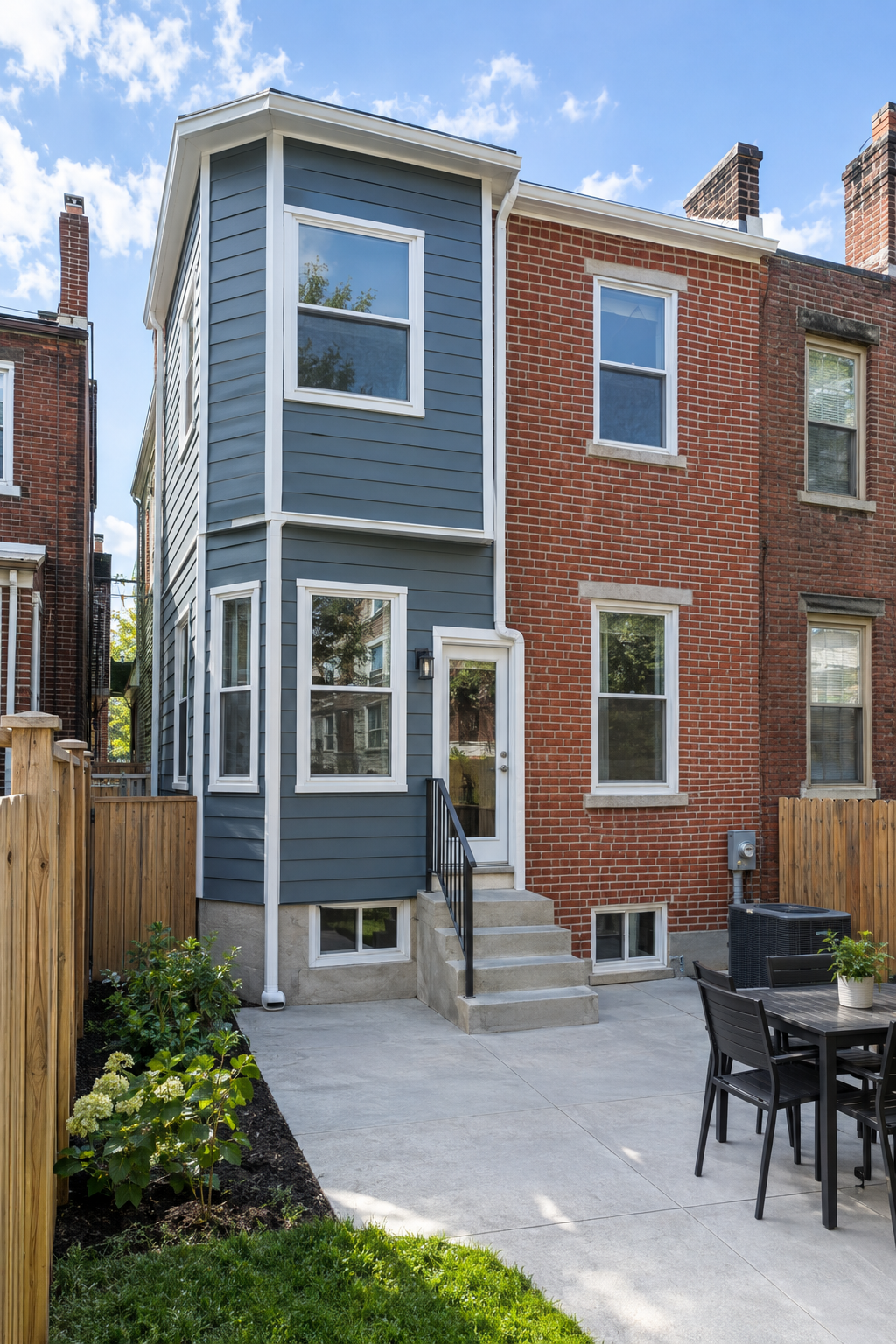
One client in Point Breeze had leaks around the rear windows and soft spots in the old siding. We replaced it with new fiber cement lap siding, white trim and seamless gutters. The rainscreen detail behind the boards was the part you cannot see, but it matters most.
This guide explains how rainscreen siding works, where Z-flashing goes, and when this upgrade makes sense.
What Is Rainscreen Siding?
A rainscreen is a wall assembly with a drainage gap between the siding and the weather barrier. Thin vertical furring strips create that gap.
- Drainage. Water that gets behind siding runs down and out.
- Drying. Air movement helps the wall dry after storms.
- Longer paint life. Siding that dries evenly holds paint better.
- Less rot risk. Sheathing stays drier over time.
Building Science Corporation research on rain control explains why a drainage gap is one of the most effective ways to manage rain in walls.
Key Layers in a Rainscreen Siding Wall
Each layer has a job. Skipping one weakens the whole system.
- Sheathing. Damaged boards are replaced before anything else.
- Housewrap. A breathable weather barrier lapped shingle-style.
- Furring strips. Vertical strips that create the air gap.
- Insect screen. Mesh at the top and bottom keeps pests out.
- Siding and trim. Fiber cement or other cladding attached to the strips.
Where Z-Flashing and Window Flashing Go
Flashing directs water out at every horizontal break. In rowhomes, this often happens where siding meets brick.
- Z-flashing at horizontal joints between siding sections.
- Head flashing above windows and doors.
- Drip cap where siding meets a brick lintel or masonry wall.
- Sill pans under replacement windows.
- Kick-out flashing where a roof edge meets a wall.
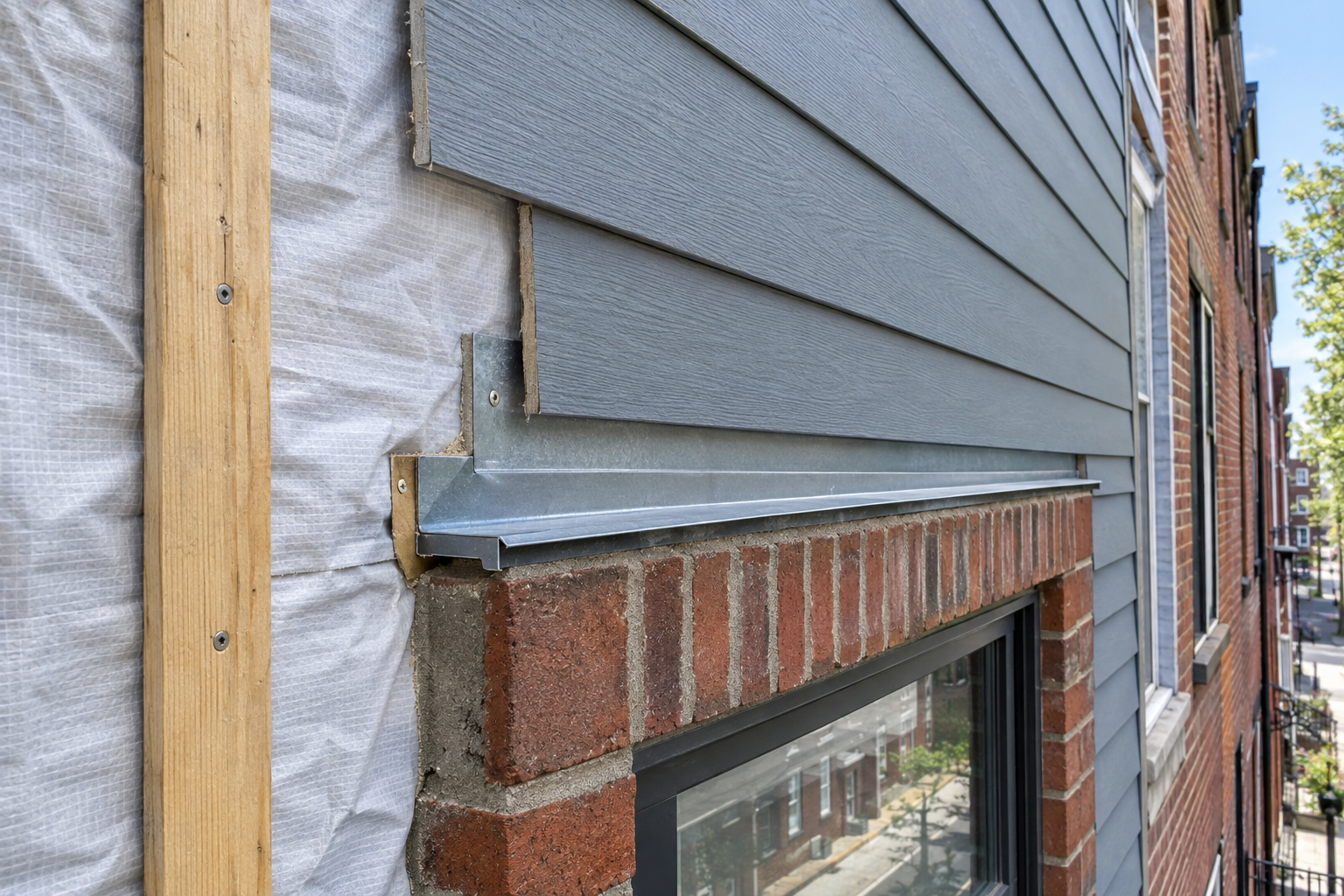
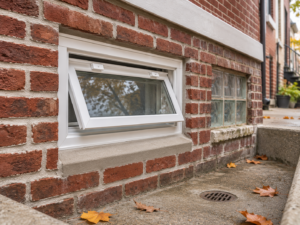
These details are what stop leaks around rear windows, the most common complaint we hear.
Rainscreen Siding vs. Direct-Applied Siding
Rainscreen siding makes sense when:
- The wall faces strong wind-driven rain.
- Previous siding showed rot or leaks.
- You want maximum life from paint and siding.
Direct-applied siding may be enough when:
- The wall is well sheltered.
- Only a small section is being repaired.
- Trim depth around windows cannot be adjusted.
Warning Signs Your Siding Is Holding Water
- Soft or swollen siding near the bottom of the wall.
- Peeling paint that returns quickly.
- Stains inside around rear windows.
- Gaps where siding meets brick.
If you see these signs, the sheathing behind the siding should be inspected before new cladding goes up.
Frequently Asked Questions
Does rainscreen siding cost much more? It adds some material and labor for furring strips and screening. However, it can extend the life of siding and sheathing.
Can rainscreen siding be used with fiber cement? Yes. Fiber cement works very well over a drained rainscreen gap.
Will the wall get thicker? Slightly. We adjust window and door trim so the finished look stays clean.
Do you also replace gutters? Yes. New seamless gutters and downspouts are often part of the same project.
Upgrade Your Rowhome Siding in Philadelphia
Rainscreen siding protects rear additions from Philadelphia’s wind-driven rain and freeze-thaw cycles. Philadelphia Exterior Contractors handles siding, windows, gutters and masonry transitions in one project. Learn more about our siding installation services, our window replacement work, or contact our team for an estimate.