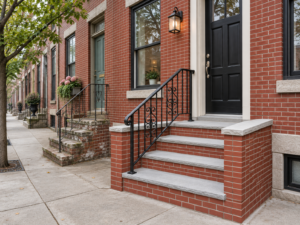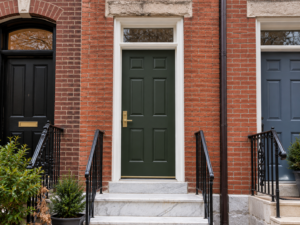
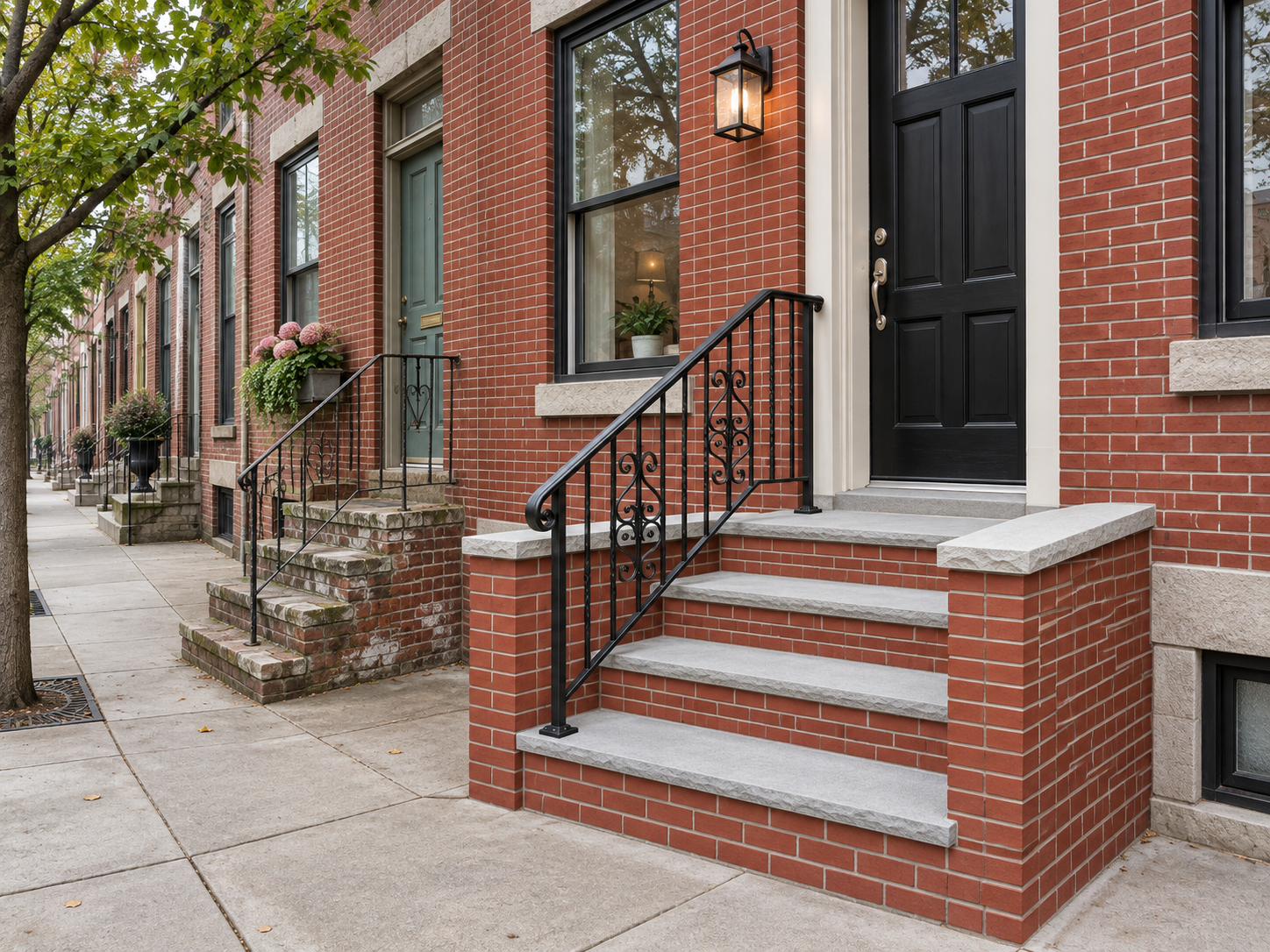
The front stoop is one of the most recognizable parts of a Philadelphia rowhome. From the marble steps of Queen Village and Bella Vista to the brick stoops of West Philadelphia and the concrete steps of Kensington, Port Richmond and the Northeast, stoops are where neighbors sit, where packages land and where every guest first steps onto your property. They also take a beating. Freeze-thaw cycles, road salt, water running off the facade and decades of foot traffic slowly loosen brick, crack concrete and wash out mortar.
A wobbly step or a crumbling cheek wall is more than a cosmetic problem. It can be a trip hazard, and water that gets into a failing stoop often finds its way into the basement or the front wall of the house. This guide explains how stoops fail, how to tell whether yours needs repair or rebuilding, and what to discuss with your contractor before the work begins.
How Rowhome Stoops Are Built
Most Philadelphia stoops are built from one or more of these materials:
- Brick, with brick or stone treads and cheek walls on each side.
- Concrete, either poured in place or added over older steps.
- Marble or other stone treads, common in older South Philadelphia and Center City blocks.
- Combinations, such as brick risers with stone or concrete treads, or a concrete overlay on top of original brick.
Underneath, the stoop may be solid masonry, rubble fill or a hollow space next to the basement wall. That hidden structure matters. A stoop that looks solid on the outside may be resting on loose fill that has settled over the years.
Common Signs of Trouble
Watch for these signs that a stoop needs attention:
- Loose or rocking treads, especially at the top step.
- Open or missing mortar joints in brick risers and cheek walls.
- Spalling brick, where the face of the brick flakes or pops off.
- Cracked concrete, especially at the corners or where steps meet the house.
- A gap opening between the stoop and the facade.
- Water stains or dampness in the basement directly behind the stoop.
- Railings that are loose because their anchors have rusted or the masonry around them has cracked.
- Settled or tilted steps that collect water instead of shedding it.
A single loose tread can often be reset. Widespread cracking, a stoop pulling away from the house or signs of water entering the basement usually point to a larger repair.
Repointing, Repair or Rebuild?
Most stoop work falls into one of three categories:
- Repointing. If the brick and stone are sound but the mortar joints are open, cutting out the old mortar and repointing can restore the stoop.
- Targeted repair. Resetting loose treads, replacing spalled brick, repairing cracked concrete or re-anchoring a railing.
- Rebuilding. When the structure underneath has failed, the stoop is pulling away from the house, or the masonry is broken in many places, taking it down and rebuilding is often the more durable choice.
Your contractor should explain which approach fits your stoop and why. Patching a stoop that is moving will only buy a season or two.
Getting the Mortar Right
The mortar used to repair brick and stone matters as much as the masonry itself, especially on older homes. The National Park Service’s Preservation Brief 2 on repointing mortar joints explains that repointing mortar should be softer or more permeable than the masonry units and no harder or more impermeable than the historic mortar. It notes that mortar stronger than the brick may not give under stress, transferring that stress to the brick and causing cracking or spalling, and that mortar is meant to be sacrificial so that damage happens in the joint rather than in the brick.
For a rowhome stoop, that usually means:
- Matching the mortar to the brick rather than using the hardest mix available.
- Avoiding straight portland cement patches on soft historic brick.
- Matching color and joint profile so the repair blends in.
- Cutting out deteriorated mortar to a proper depth before repointing, not smearing new mortar over old.
Ask your contractor what mortar they plan to use and why. On older homes, the answer should take the existing brick into account.
Water: The Root Cause
Most stoop damage comes from water. Before rebuilding, look at where water is coming from:
- Facade runoff. Rain running down the front of the house can pour onto the top step.
- Downspouts that discharge near the stoop.
- Flat treads. Steps should be slightly pitched so water runs off rather than pooling.
- Cracks at the house wall that let water run behind the stoop.
- Sidewalk slope directing water toward the steps.
Fixing these issues during repair keeps the new work from failing the same way.
Railings and Safety
Railings are often anchored directly into the stoop masonry. Over time, water around the posts rusts the steel, and the expanding rust cracks the masonry.
- Check that the railing is solid and properly anchored.
- Replace rusted bases or post sections.
- Re-anchor posts with materials suited to exterior masonry.
- Consider whether the railing height and spacing still suit the household, especially for older family members.
Paint and seal steel railings regularly to slow rust.
Working on a Philadelphia Block
Stoops sit at the edge of the public sidewalk, so stoop work often involves the street side of the property:
- Sidewalk protection. Work areas need to be protected for pedestrian safety.
- Neighboring stoops. Many rowhome stoops share cheek walls with the house next door. Coordinate with your neighbor before work starts.
- Historic districts. In some neighborhoods, changes to the front of a house may require review. Confirm before changing materials or design.
- Permits. Depending on the scope and location, the work may need a permit. Your contractor should explain what applies.
Choosing Materials for a Rebuild
If the stoop needs to be rebuilt, the choice of material affects both appearance and durability:
- Brick. Matches most rowhome facades and can be repointed over time. Choose brick rated for exterior steps.
- Concrete. Durable and economical, but can look out of place on a historic block if not finished carefully.
- Stone treads. Long-lasting and traditional, though more expensive.
- Combination designs. Brick risers with stone or concrete treads balance look, cost and durability.
Talk through how each option will look next to the neighbors’ stoops. On a uniform block, matching the existing style usually looks best.
Questions to Ask Your Masonry Contractor
Because stoop work is visible from the street and affects safety, it is worth asking a few questions before work begins:
- Is the structure under the stoop sound, or will it need to be rebuilt?
- What mortar will you use, and how will it match the existing brick?
- How will you match the color and joint profile of the existing masonry?
- Will you correct the pitch of the treads so water drains properly?
- How will you handle the joint between the stoop and the house wall?
- What will you do about the railing anchors?
- How will you protect the sidewalk and pedestrians during the work?
- How long should the new mortar cure before the stoop is used, and what weather do you need?
A contractor who explains the cause of the damage, not just the repair, is more likely to deliver a stoop that lasts. Ask for photos of similar rowhome stoop work they have done, ideally on blocks with brick or stone similar to yours.
Frequently Asked Questions
Can a loose step be fixed without rebuilding the whole stoop? Often yes. A loose tread can usually be reset if the structure below is sound.
Why does my stoop keep cracking after it is patched? The cause is often water, movement or mortar that is harder than the brick. Fixing the cause matters more than the patch.
Is it okay to cover a brick stoop with concrete? It is possible, but a concrete overlay can trap moisture and hide problems. Discuss the condition of the brick first.
Does stoop repair require a permit in Philadelphia? It depends on the scope and location. Ask your contractor to confirm before work begins.
When is the best time to repair a stoop? Masonry work is best done in mild weather, avoiding freezing temperatures while the mortar cures.
If your front steps are loose, cracked or letting water into the basement, Philadelphia Exterior Contractors LLC can assess the stoop, explain whether it needs repair or rebuilding, and match the masonry to your home. Learn more about our exterior remodeling services in Philadelphia and request an inspection before winter.