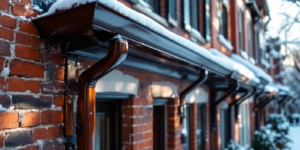

If you own a Philadelphia rowhome, your exterior isn’t just curb appeal—it’s your home’s “water shield.” And once water gets behind siding, trim, or brick joints, it can travel fast. As a result, what looks like a small exterior issue often becomes interior drywall damage, warped flooring, and mold risk.
That’s why the best exterior remodeling in Philadelphia starts with a water-intrusion checklist. If you address the entry points first, your repairs last longer, your paint holds better, and your home stays healthier.
The “Water Entry” Checklist (Start Here)
1) Roof-to-wall flashing and step flashing
Many leaks start where roofing meets walls, chimneys, and parapets. In Philly, these transitions take a beating from wind-driven rain. So, check step flashing along sidewalls and counter flashing at masonry. If flashing is loose, corroded, or patched repeatedly, it’s time for a proper repair—not another band-aid.
2) Window perimeters and trim seams
Water loves corners. That’s why you should inspect the top and side seams of windows, especially older frames. Look for cracked caulk, gaps, or soft wood trim. Then, check for staining beneath sills. If you see recurring discoloration, water is getting behind the finish.
3) Siding edges and transitions
Vinyl, Hardie, wood, and composite systems all fail at edges if detailing isn’t correct. Therefore, verify that:
- starter strips and end caps are intact
- seams are tight and not “fish-mouthing”
- penetration points (hose bibs, conduit, vents) are properly sealed
- siding is not pinned too tight (it needs movement)
4) Gutters, downspouts, and discharge
Even a perfect façade can fail if water is dumping at the foundation. So, make sure gutters are pitched correctly and downspouts discharge away from the house. If you have overflowing gutters, you may also have clogged leaders or blocked underground drains. This is a huge cause of basement moisture and foundation staining.
5) Mortar joints and brick pointing
Philly brickwork is beautiful, but mortar wears out. When joints erode, water enters and freezes, causing bigger damage. Therefore, inspect mortar joints around windows and at exposed elevations. Repointing is often the most cost-effective exterior “reset.”
6) Fascia, soffits, and roof edge wood
Rot at fascia boards is common because drip edges and gutters fail first. So, check for soft wood, peeling paint, and black staining. If you fix roof edge components early, you avoid larger framing repairs later.
7) Foundation line and grading
Finally, check grade around the home. If soil slopes toward the foundation, water will pool. Even minor regrading and downspout extensions can reduce moisture long term.
Exterior remodeling that actually increases value
In practice, the best “value exterior upgrades” in Philadelphia are water-first:
- repair flashing + window trim
- new gutters/downspouts
- targeted siding replacement
- masonry pointing + sealing
- fascia/soffit repairs
Once those are done, painting and cosmetic upgrades finally last.
Service areas: Fishtown, Kensington, Port Richmond, Manayunk, Roxborough
exterior contractors Philadelphia, exterior remodeling, siding repair, gutter replacement, waterproofing/exterior-remodeling-philadelphia/ or /siding-repair-philadelphia/
Trusted outbound link: FEMA guidance on reducing flood/water damage at home: https://www.floodsmart.gov/prepare/minimize-damage
If your exterior shows rot, peeling paint, drafts, or recurring leaks, contact Philadelphia Exterior Contractors for a water-first inspection and a plan that protects your home long-term.