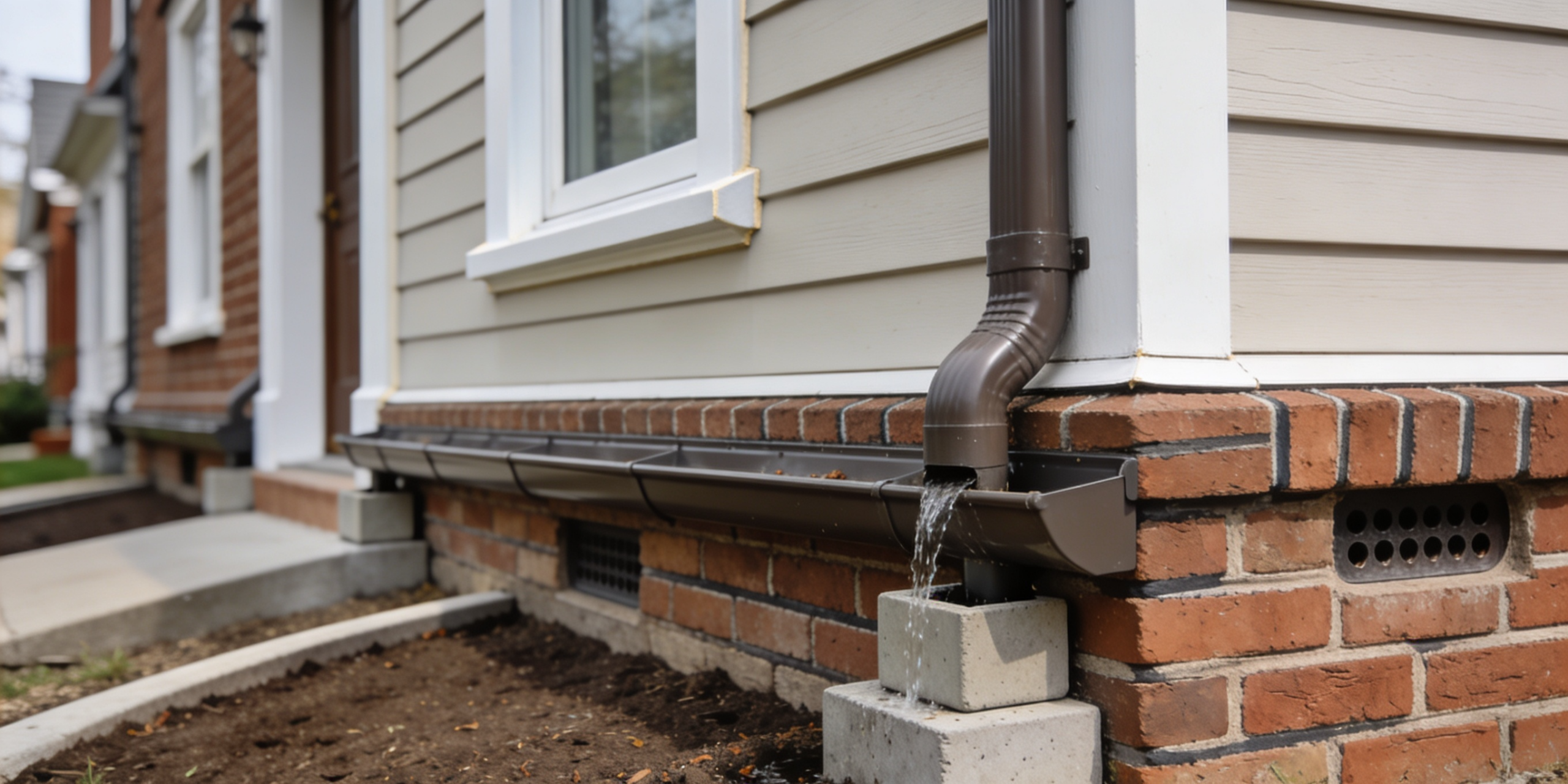
Roof drainage is not finished when water reaches the bottom of a downspout. If the discharge lands beside the foundation or flows toward a basement stair, the gutter system may simply move the problem lower.
Read the Problem Before Choosing the Material
South Philadelphia and Point Breeze rowhomes often have narrow rear yards, concrete paving, shared alleys, basement doors, and limited soil for runoff to spread.
Local Construction Adds These Constraints
Observe the discharge during rain. Check for ponding beside the wall, flow toward doors or window wells, clogged underground connections, staining, efflorescence, and water crossing walking surfaces.
Coordinate These Items Before Installation
Extensions, drains, grading changes, or hardscape corrections may be appropriate depending on the site. Avoid redirecting a large volume of water toward a neighboring foundation or public walkway.
The Practical Standard for a Better Result
Exterior waterproofing works best when roof runoff, wall protection, and ground-level drainage are planned as one system.
Frequently Asked Questions
Can downspout water cause basement moisture?
Yes. Repeated discharge beside the foundation can contribute to wet soil and moisture pressure around below-grade walls.
Should a downspout connect to an underground drain?
It can in some systems, but existing piping should be verified for condition, destination, and capacity.
Can a new patio create drainage problems?
Yes. Hardscape can trap water against the house if slope and drainage are not planned correctly.
Plan the Next Step
Philadelphia Exterior Contractors can review gutters, downspouts, hardscape, masonry, and exterior waterproofing around the full path of roof runoff.
Helpful source: Philadelphia Water Department