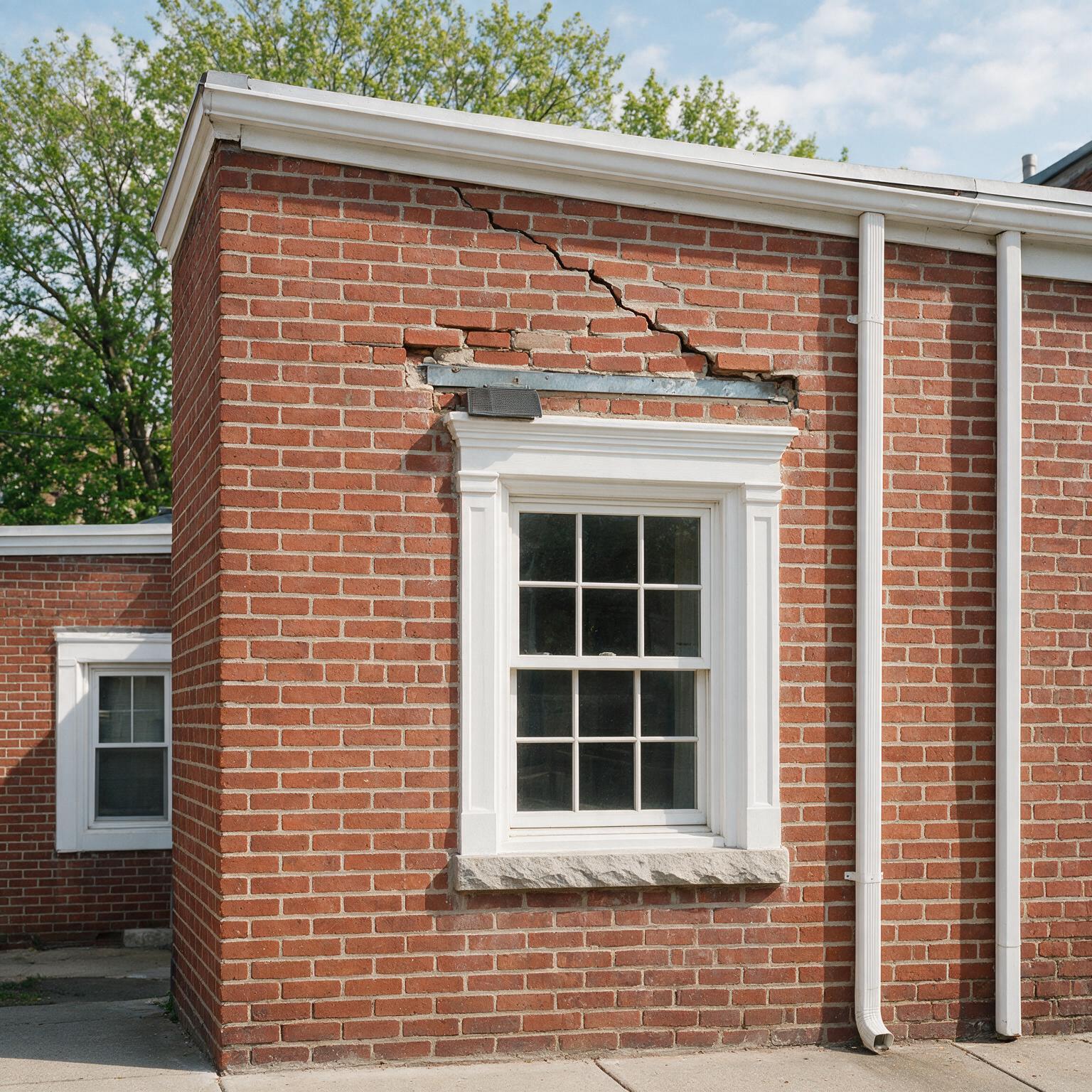
Cracks above a window are often repointed as if the mortar failed by itself. In many brick walls, a steel lintel supports masonry across the opening and corrosion can push that masonry outward or upward.
Start With the Existing Condition
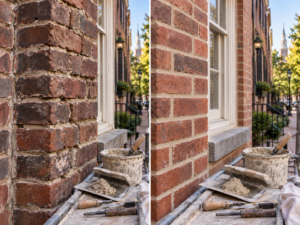
West Philadelphia and Germantown facades may contain older brick, painted lintels, stone sills, and generations of mortar repair that make the original condition difficult to read.
How the Building Type Changes the Plan
Look for rust staining, horizontal cracks at the lintel line, displaced brick, spalled edges, and water sources feeding the area. Check bearing at each side of the opening and the condition of nearby mortar.
The Details to Resolve Early
Repointing restores failed joints; it does not remove corrosion pressure from steel. Depending on condition, the scope may involve steel treatment or replacement, masonry rebuilding, flashing, and compatible mortar.
What Separates a Patch From a Durable Result
Support and sequencing matter while the opening is repaired. The goal is to correct the cause before finishing the brickwork around it.
Frequently Asked Questions
Does every crack over a window mean lintel failure?
No. Settlement, mortar deterioration, and other movement can create similar cracks, so the whole opening should be evaluated.
Can a rusted lintel be painted and left in place?
Limited surface corrosion may be treated differently from significant section loss or displacement; condition determines scope.
Should the brick be repointed before the lintel is fixed?
If lintel movement is causing the cracking, addressing the support condition first helps prevent repeat failure.
Plan the Next Step
Philadelphia Exterior Contractors can assess masonry openings, lintels, brick, mortar, flashing, and water paths before defining the repair.
Helpful source: City of Philadelphia – Get a Building Permit