The classic red brick facades of Kensington, Northern Liberties, and West Philadelphia define the architectural character of the city. While individual clay bricks can remain structurally sound for centuries, the mortar joints binding them together have a finite lifespan. Mortar is engineered to be the functional sacrificial element of a masonry wall, absorbing structural movement and weathering the elements so the bricks themselves remain undamaged. Over decades of exposure to wind, rain, and thermal expansion, mortar slowly degrades. Recognizing when your brickwork requires repointing is essential for preserving the structural integrity and moisture resistance of your rowhome exterior.
The Mechanical Purpose of Mortar in Masonry Walls
To understand why mortar fails, property owners must understand its structural role. In traditional masonry construction, mortar serves two primary functions: it beds the bricks together to create a unified structural wall, and it acts as a breathable drainage system for moisture. Mortar is intentionally formulated to be softer and more permeable than the surrounding brick. When moisture penetrates a masonry wall—whether from rain, humidity, or interior vapor—it naturally seeks the path of least resistance to evaporate outward. A healthy, permeable mortar joint allows this moisture to escape harmlessly into the atmosphere without damaging the brick faces.
Identifying Signs of Mortar Deterioration
Mortar decay occurs gradually, but visual inspections of your exterior brickwork will reveal clear indicators that repointing is required. Key symptoms include:
- Cracked and Separated Joints: Hairline fractures running horizontally along mortar courses or stepping vertically along brick perimeters indicate that the bond between the mortar and the brick has broken.
- Crumbling and Powdery Mortar: Mortar that flakes away when touched, turns to fine powder, or leaves sandy residue on window sills indicates that the binding agents have leached out from decades of weathering.
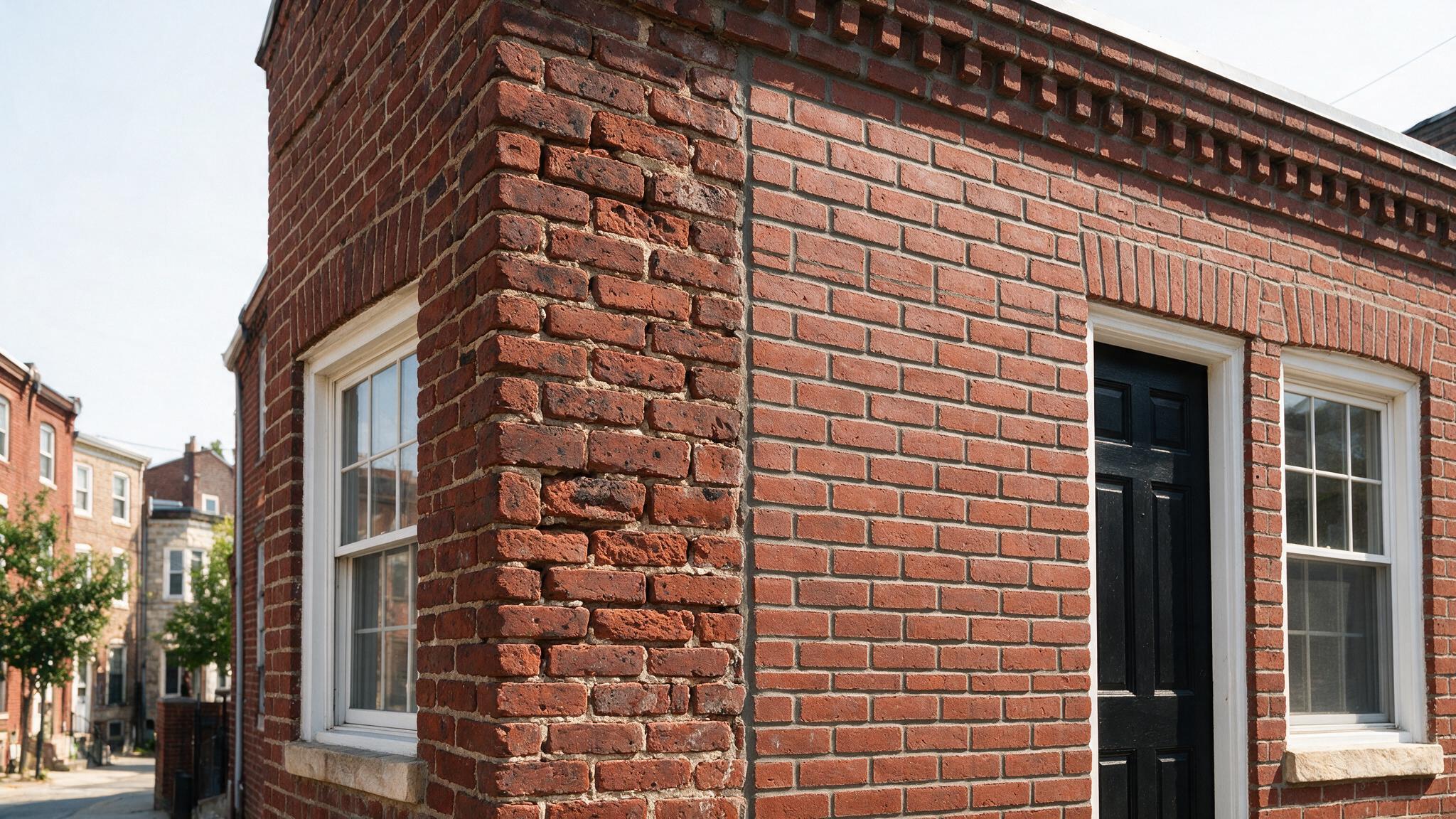
- Recessed and Missing Mortar: When mortar erodes to a depth equal to or greater than its width (typically one-quarter to three-eighths of an inch), an open channel is created. These recesses allow wind-driven rain to collect and pool directly inside the wall cavity.
- Efflorescence and Surface Staining: Persistent white crystalline mineral salts appearing across brick faces signal that excessive moisture is entering open mortar joints and evaporating through the masonry.
The Repointing Process Versus Brick Replacement
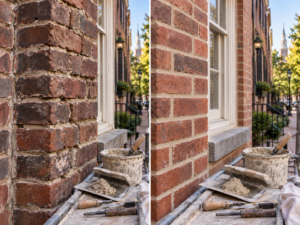
It is important to distinguish between repointing mortar joints and replacing individual bricks. Repointing—frequently referred to locally as tuckpointing—is the systematic process of cutting out deteriorated mortar to a uniform depth (usually three-quarters of an inch) using specialized mechanical grinders and hand chisels, clean-scouring the joint, and tightly packing new mortar into the cavity. This process restores the weather-resistant seal of the facade while maintaining original historic brickwork.
Brick replacement becomes necessary when individual clay bricks have suffered physical destruction. When open mortar joints allow water to saturate a brick’s interior core, freezing winter temperatures cause the trapped water to expand. This expansion cracks the brick face and causes the hardened outer crust to pop off—a condition known as spalling. A spalled brick loses its structural load-bearing capacity and must be physically cut out and replaced with a matching historic or reclaimed unit.
The Critical Importance of Mortar Compatibility
One of the most severe damage mechanisms in urban brick repair is the improper use of modern Portland cement on historic buildings. Many rowhomes constructed before the mid-20th century were built using lime-based mortars, which are exceptionally soft, flexible, and vapor-permeable.
If an inexperienced technician repoints a historic brick facade using a hard, rigid, high-strength modern Portland cement, the natural mechanical balance of the wall is inverted. The new Portland cement is harder and less breathable than the antique brick. When the building naturally expands with summer heat or absorbs moisture, the rigid mortar cannot flex or breathe. As a result, the moisture and mechanical stress are forced directly into the soft clay bricks, causing the bricks themselves to crack, crush, and spall. Following National Park Service masonry preservation guidance, specifying custom-blended mortars that match the compressive strength, vapor permeability, and color texture of the original historic joint is vital for permanent masonry preservation.
Evaluating Related Moisture Sources and Structural Movement
Mortar joints rarely deteriorate at a uniform rate across an entire facade. Severe, localized mortar decay is frequently caused by external moisture sources dumping water onto the brickwork. Before repointing, examine overflowing roof gutters, leaking downspouts, dripping window AC units, or failed window sill flashing directly above the damaged masonry. Correcting these drainage defects ensures your new pointing will not be subjected to chronic water saturation.
Furthermore, property owners should differentiate between surface mortar weathering and deep structural movement. If your brick facade exhibits severe outward bulging, stepped diagonal cracks radiating from window corners, sagging steel window lintels, or loose bricks that shift under hand pressure, the wall may be experiencing structural fatigue or foundation settlement. These conditions require comprehensive architectural assessment and structural masonry repair rather than simple cosmetic repointing.
Relying on experienced craftsmen for professional brick pointing in Philadelphia ensures that deteriorated joints are excavated safely without damaging surrounding brick edges, and that breathable, historically compatible mortars are packed cleanly to secure your rowhome for decades. Contact Philadelphia Exterior Contractors today to schedule an expert masonry evaluation.
What is the difference between brick pointing, repointing, and tuckpointing? In general residential usage, these terms are frequently used interchangeably to describe filling mortar joints. Technically, pointing refers to the initial finishing of mortar joints in new construction, repointing is the removal and replacement of deteriorated mortar in existing walls, and tuckpointing is a decorative finishing technique using two contrasting mortar colors to create the visual illusion of very fine joints.
Why is it harmful to use modern Portland cement on an old brick rowhome? Modern Portland cement is extremely hard and rigid, whereas historic brick and original lime mortar are relatively soft and flexible. When hard cement is packed between antique bricks, natural building movement and thermal expansion force the stress into the brick, causing the bricks to crack and crush rather than the mortar.
How often does a Philadelphia brick rowhome require repointing? A quality repointing job utilizing properly formulated mortar and correct installation techniques typically lasts between forty and eighty years, depending on the wall’s exposure to wind-driven rain, sun, and exterior drainage conditions.
Can repointing be performed during freezing winter weather? No. Mortar requires temperatures consistently above forty degrees Fahrenheit during application and curing to hydrate and achieve its engineered structural strength. Freezing temperatures cause wet mortar to freeze and crumble before it sets properly.
What causes bricks to flake and pop off on the front of my house? This condition is called spalling. It occurs when water penetrates open mortar joints or unsealed brick faces, saturates the clay interior, and expands during freezing winter temperatures, breaking off the hard outer surface of the brick.