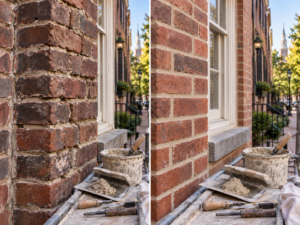
Water is a home’s most relentless enemy. For tightly packed rowhomes in Fishtown, Northern Liberties, and across Philadelphia, efficiently moving rainwater off the roof and away from the foundation is a matter of structural survival. When gutters fail, the resulting cascade doesn’t just ruin your landscaping—it destroys your brickwork, rots your siding, and eventually floods your basement.
Upgrading to seamless gutter installation in Philadelphia is one of the most cost-effective exterior waterproofing investments a homeowner can make.
The Flaws of Sectional Gutters
Traditional gutters bought off the shelf at a hardware store come in 10-foot sections. To cover the width of a roof, these sections must be overlapped and glued together with sealant. Over time, UV exposure, freezing ice dams, and heavy debris cause that sealant to degrade.
Once the seams fail, water leaks directly down the exterior walls. This concentrated flow causes:
- Fascia Board Rot: Water backing up behind the gutter rots the wooden boards that hold the roof structure together.
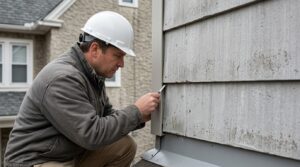
- Siding Stains: Dirty water dripping continuously leaves permanent dark streaks down vinyl and fiber cement siding.
- Foundation Saturation: When water drops directly at the base of the wall instead of flowing to the downspout, hydrostatic pressure builds up against the basement walls, forcing water through the concrete.
The Seamless Advantage
Seamless gutters eliminate the primary point of failure: the splices. A professional exterior contractor utilizes a specialized machine to custom-roll the gutter on-site. A continuous coil of heavy-gauge aluminum is fed into the machine, producing a single, perfectly sized trough tailored to the exact length of your roofline.
Because there are no seams between the corners, the possibility of mid-run leaks drops to zero.
Proper Sizing and Downspout Placement
Installing the trough is only half the battle. Due to the high volume of water generated by sudden summer downpours in the Mid-Atlantic, standard 4-inch gutters are often overwhelmed. Professionals typically recommend 5-inch or 6-inch K-style seamless aluminum gutters, which handle significantly more water volume without overflowing.
Equally important is downspout placement. In dense Philadelphia neighborhoods, managing the exit point of the water is tricky. Contractors design downspout routes that safely direct the flow into municipal storm drains or yard drainage systems, ensuring the discharge does not pool against your foundation or flood your neighbor’s property.
CTA
Stop letting faulty gutters erode your home’s foundation. Contact Philadelphia Exterior Contractors today for a free evaluation and upgrade to a durable, leak-free seamless gutter system.