Exterior siding—whether vinyl, fiber cement, engineered wood, or cedar shingle—serves as the primary rainscreen protecting residential wall framing from driven rain, snow, and wind across Philadelphia and surrounding suburban communities. However, wind-driven moisture rarely penetrates through the solid face of a siding panel. Instead, water intrusion almost universally occurs at overlapping siding seams, corner post transitions, window casing penetrations, and foundation trim terminations.
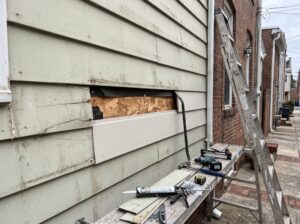
When siding seams are improperly overlapped or installed without weather-resistive barriers underneath, trapped moisture causes concealed wood rot, rusting fasteners, ruined wall insulation, and interior plaster staining.
1. High-Vulnerability Zones Across Exterior Wall Envelopes
A rigorous exterior inspection evaluates four critical siding details where moisture intrusion commonly begins:
- Siding Panel Overlaps (Seams): Siding courses must be lap-jointed according to prevailing wind directions. In Philadelphia, prevailing weather patterns require seams to lap away from primary street-facing storm directions to prevent wind from driving rain behind panels.
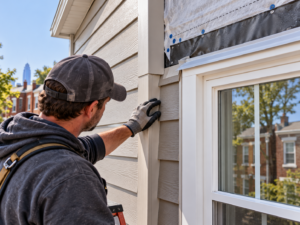
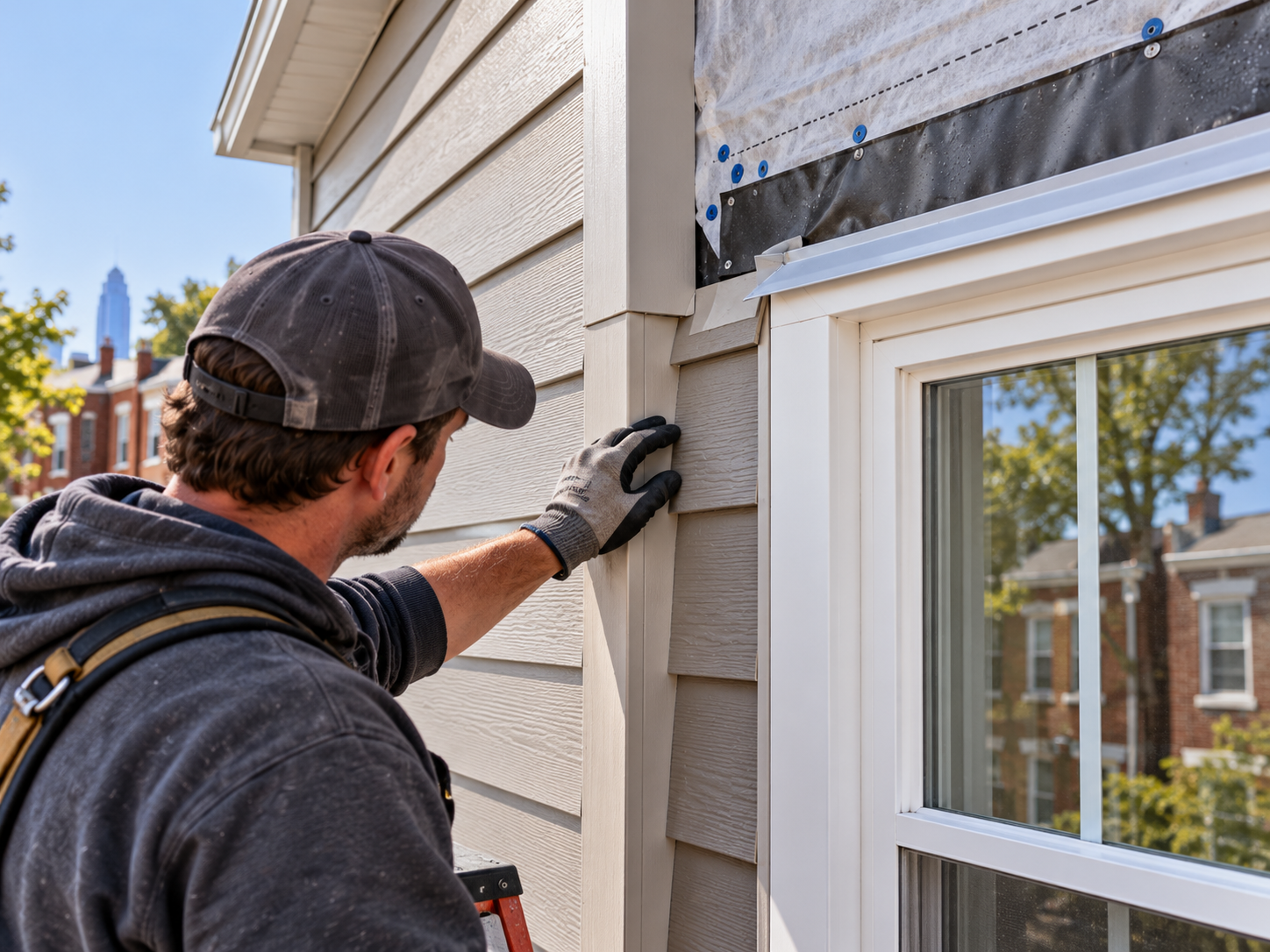
- Inside and Outside Corner Posts: Corner posts must contain internal drainage channels that extend below bottom siding courses, allowing any water entering corner joints to shed outward over foundation flashings.
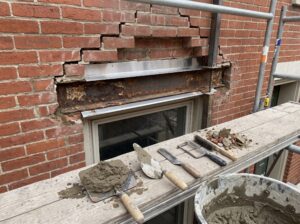
- Window & Door Head Flashing (Cap Flashing): Rigid Z-flashing must be installed above window trim, extending behind the weather-resistive barrier above to divert running wall moisture away from window frames.
- Foundation Clearance Line: Siding panels installed directly against soil or concrete absorb moisture via capillary action, causing bottom-course panel swelling and decay.
2. The Role of the Weather-Resistive Barrier (WRB)
Siding is considered a water-shedding cladding, not a 100% waterproof seal. Therefore, the house wrap or weather-resistive barrier (WRB) installed directly against plywood or OSB sheathing acts as the true secondary line of defense. The WRB must be shingled correctly: upper sheets must overlap lower sheets by a minimum of 6 inches, and all vertical seams must be sealed with specialized flashing tape.
3. Vinyl Expansion Gaps vs. Fiber Cement Butt-Joint Rules
Different siding materials require specialized joint construction. Vinyl siding expands and contracts significantly with temperature changes; nailing vinyl panels tightly or failing to leave 1/4-inch expansion gaps inside corner channels causes unsightly panel buckling. Conversely, fiber cement siding requires factory-sealed cut edges and specialized back-flashing metal tabs behind every field butt-joint.
4. Municipal Exterior Permit Compliance in Philadelphia
Re-siding major exterior wall surfaces or repairing underlying structural sheathing in Philadelphia must adhere to local building envelope standards. Review official guidance on Philadelphia exterior permit requirements before initiating major envelope work.
Protecting your home’s exterior envelope requires meticulous attention to flashing and seam details. Explore our full range of exterior remodeling services to schedule a thorough exterior inspection with Philadelphia Exterior Contractors.